






The CPR Hub
Brand Identity and Communications
Identity and Brand Elements
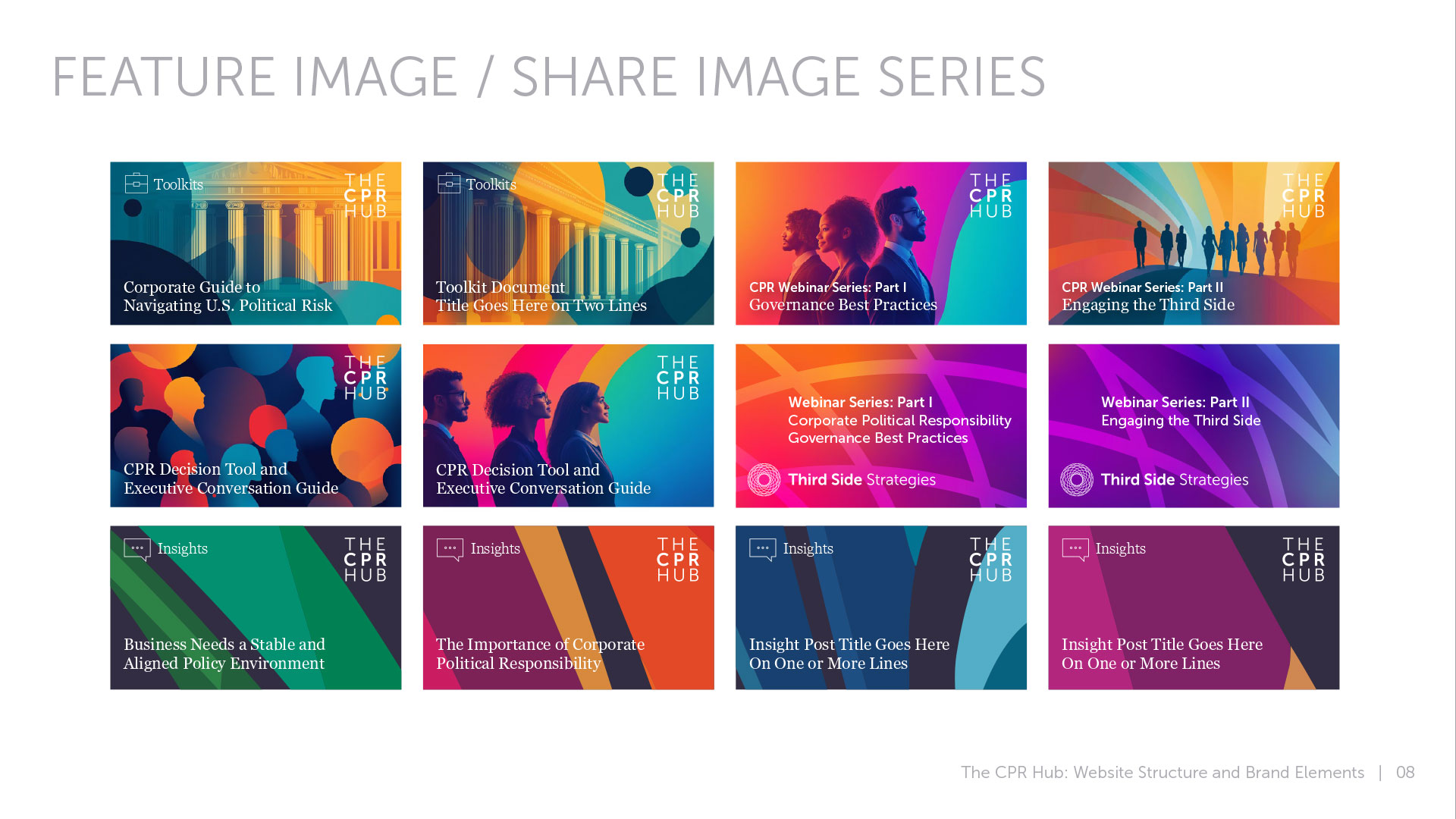
Early in the naming and identity process, the team explored branding the project as online reference resource or as non-profit consultancy. In the end, we did both, with The CPR Hub as a project of Third Side Strategies. A colorful gradient spirograph logo was introduced to represent the information hub as well as the core concept of “swarming” – using the power of community to find common ground. The scale of spirograph in relation to the two wordmarks creates an appropriate organizational hierarchy, with corresponding taglines and offerings.
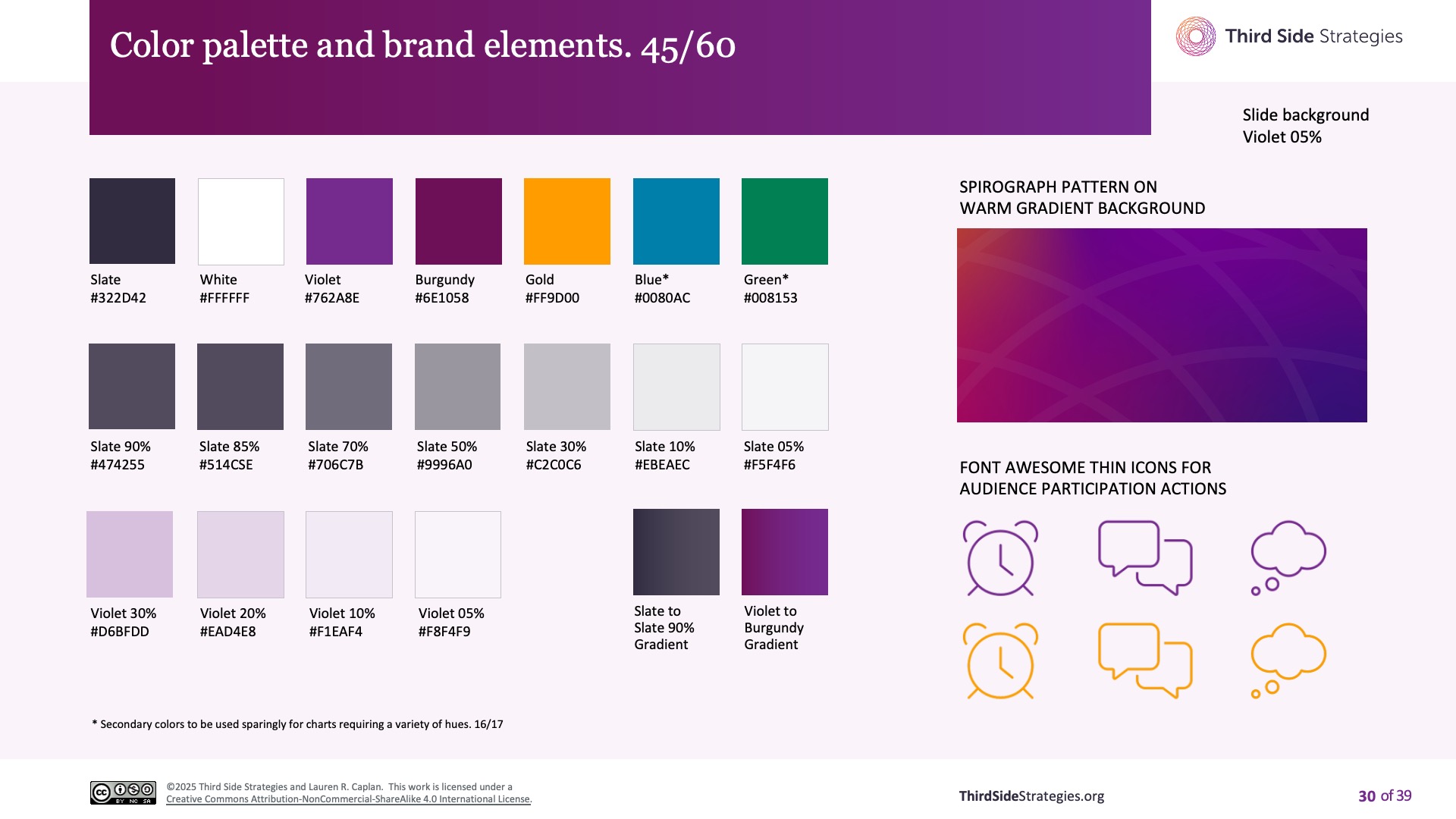
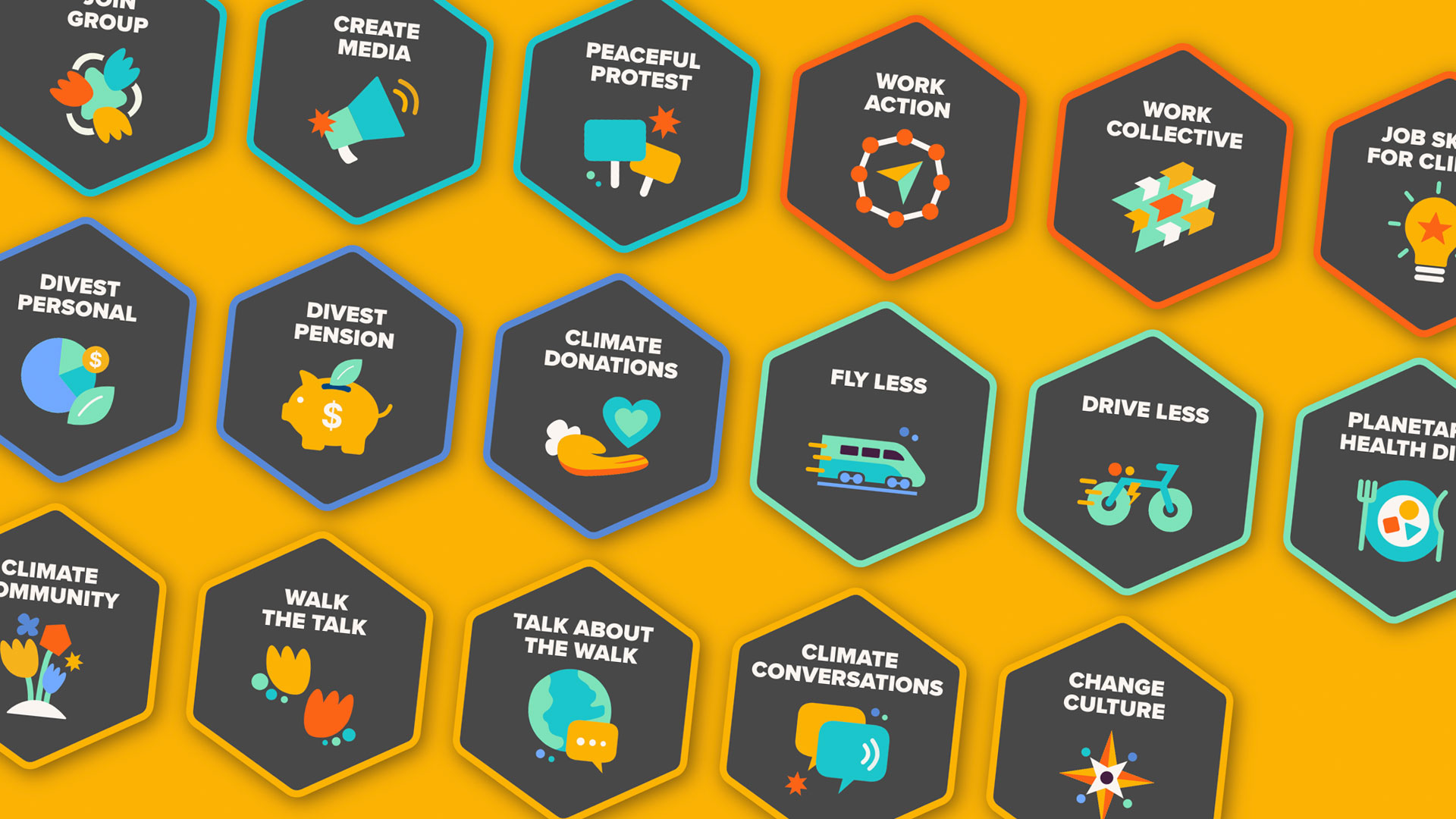
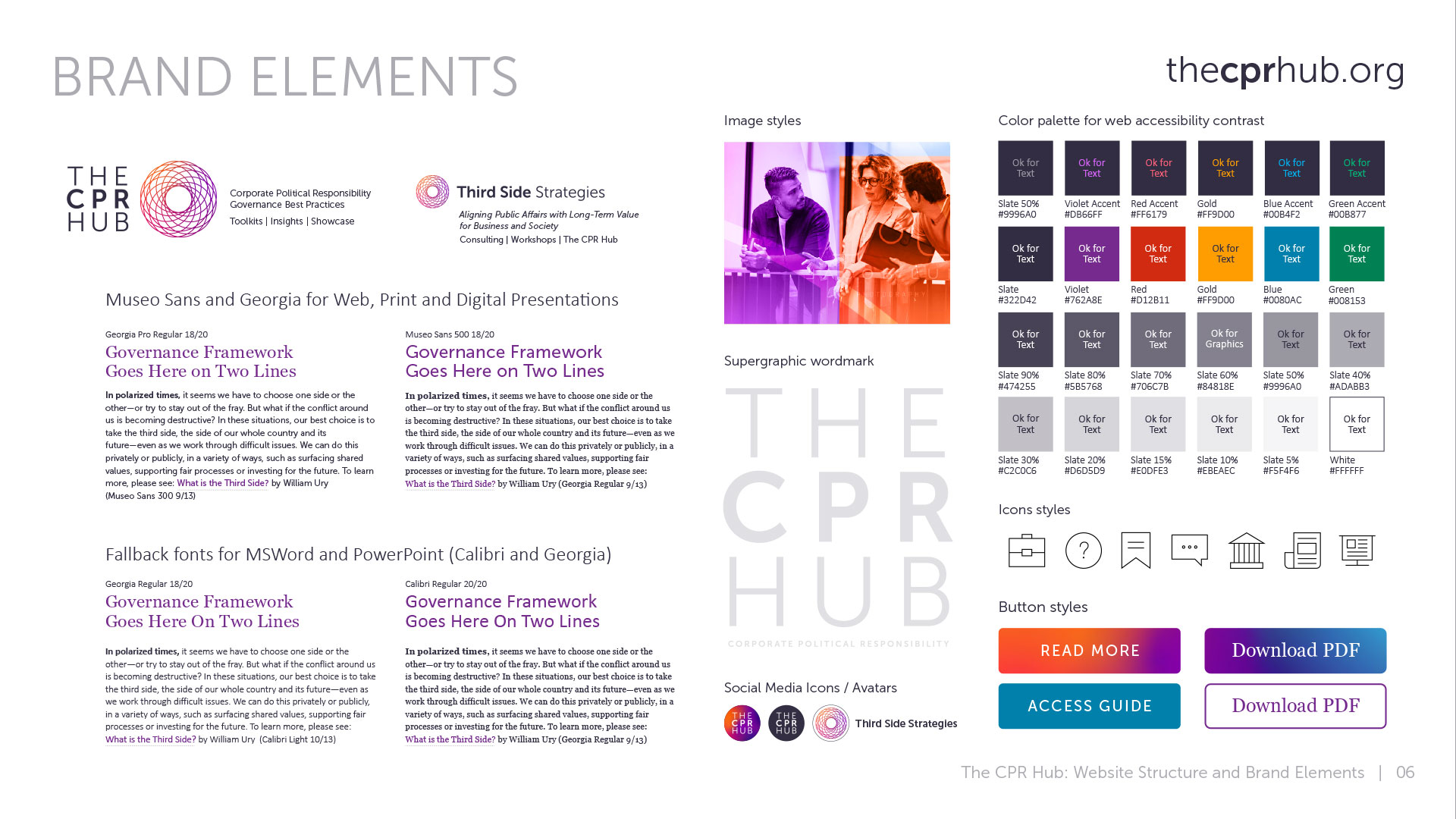
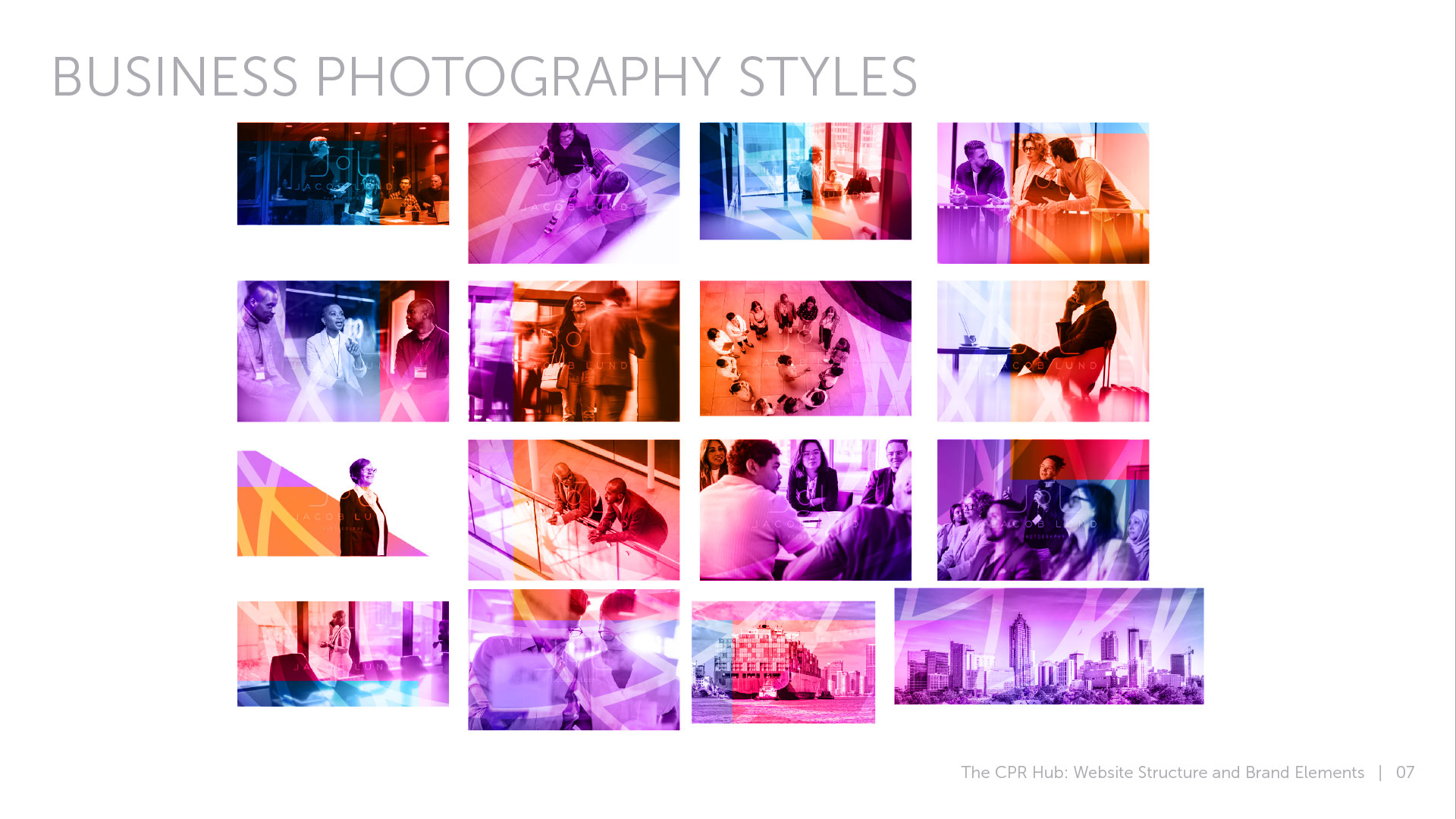
The spirograph serves as a reusable graphic element which ties together materials as a background pattern and supergraphic. Covive established a web-accessible color palette, icons styles, photography styles, and a range of designs to use as feature images for articles and social media sharing.
Website Structure
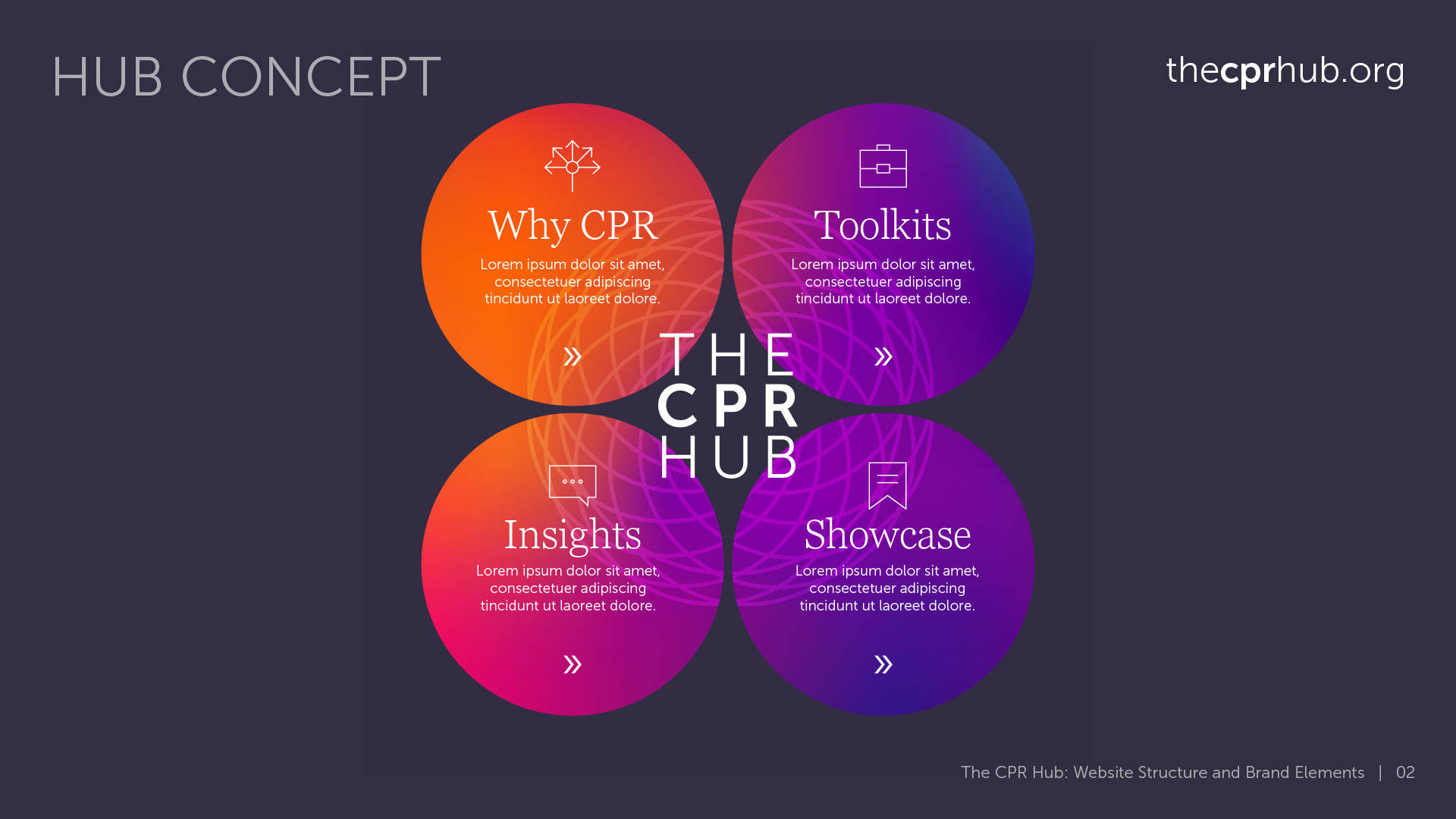
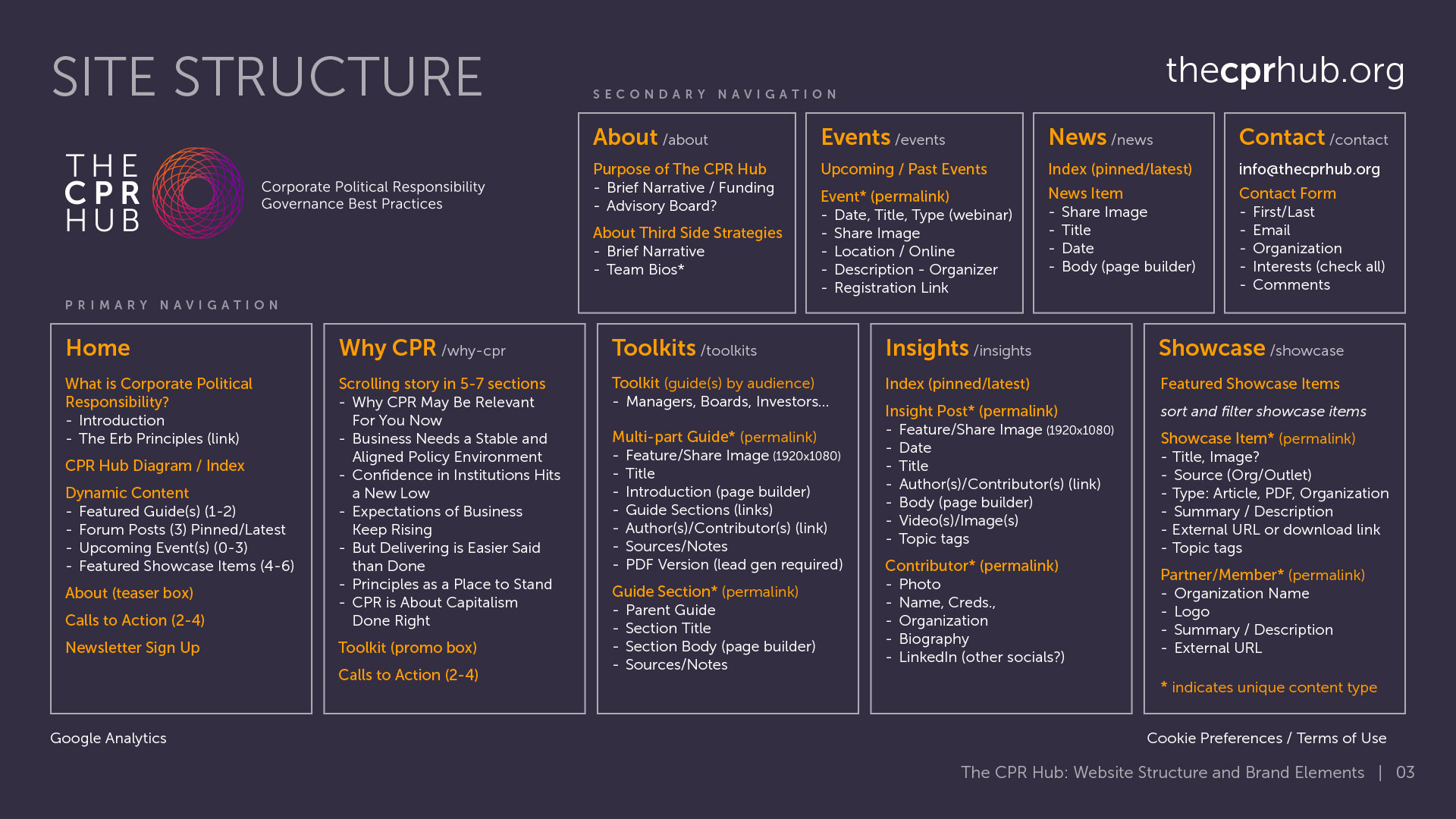
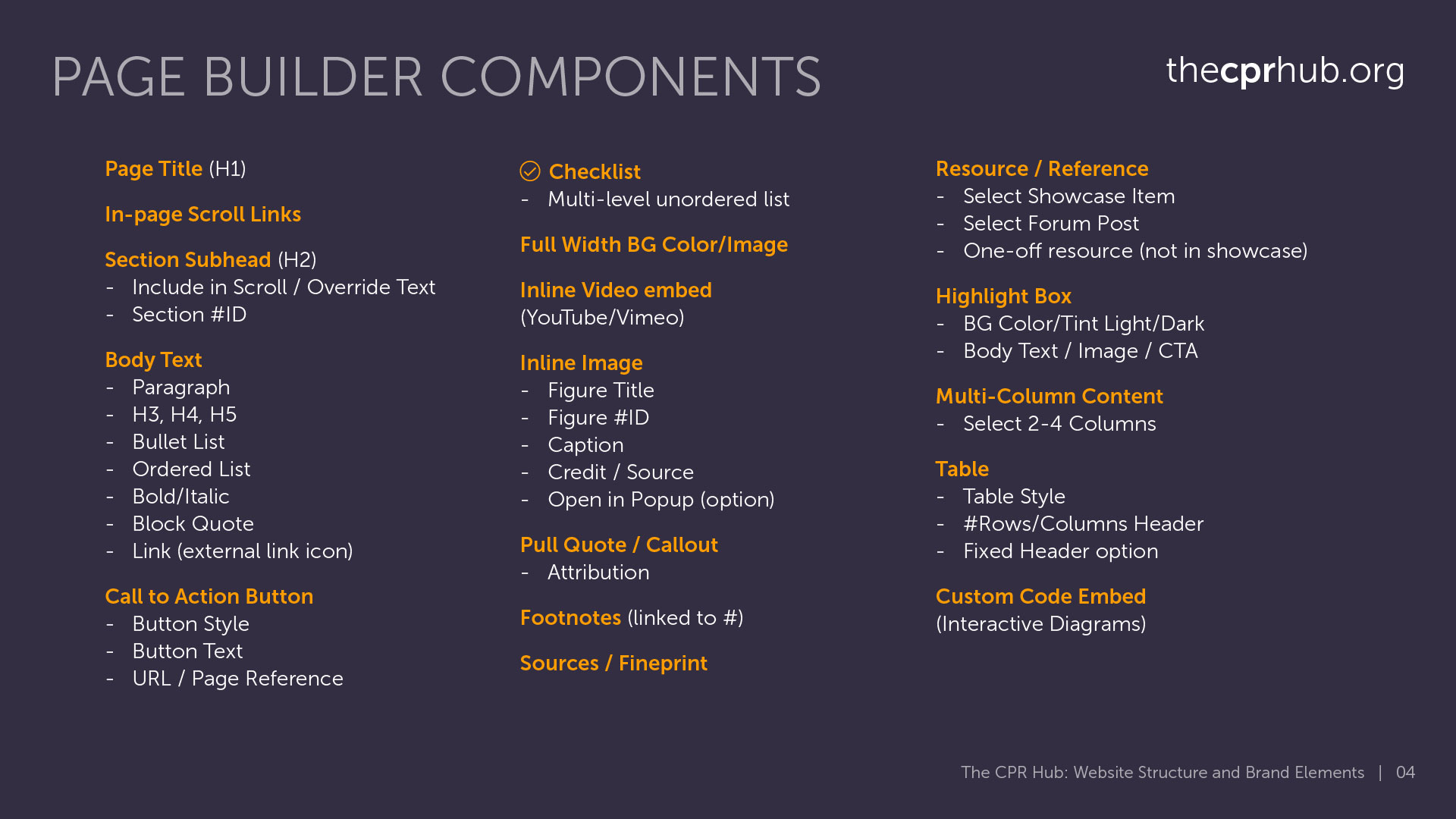
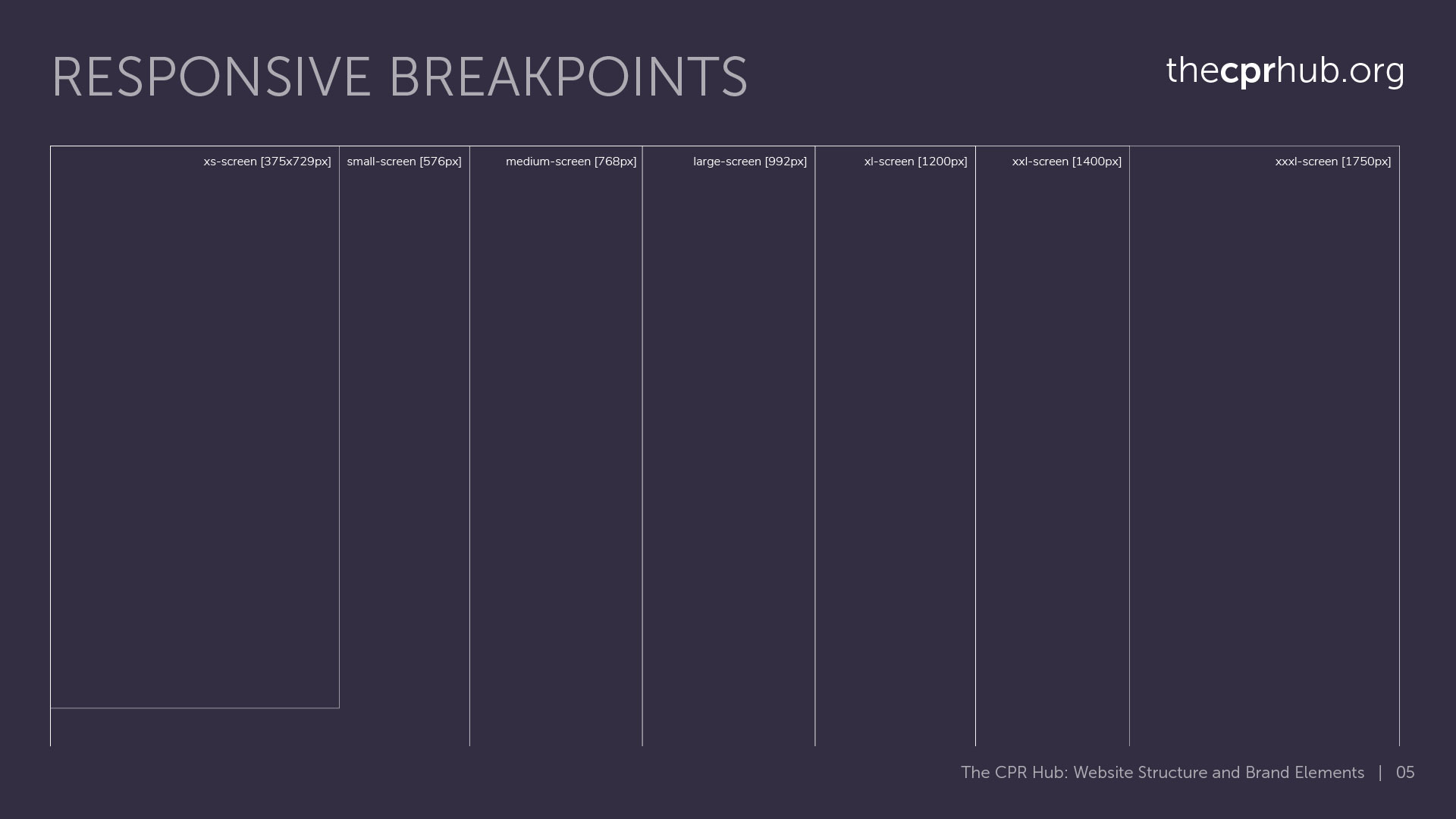
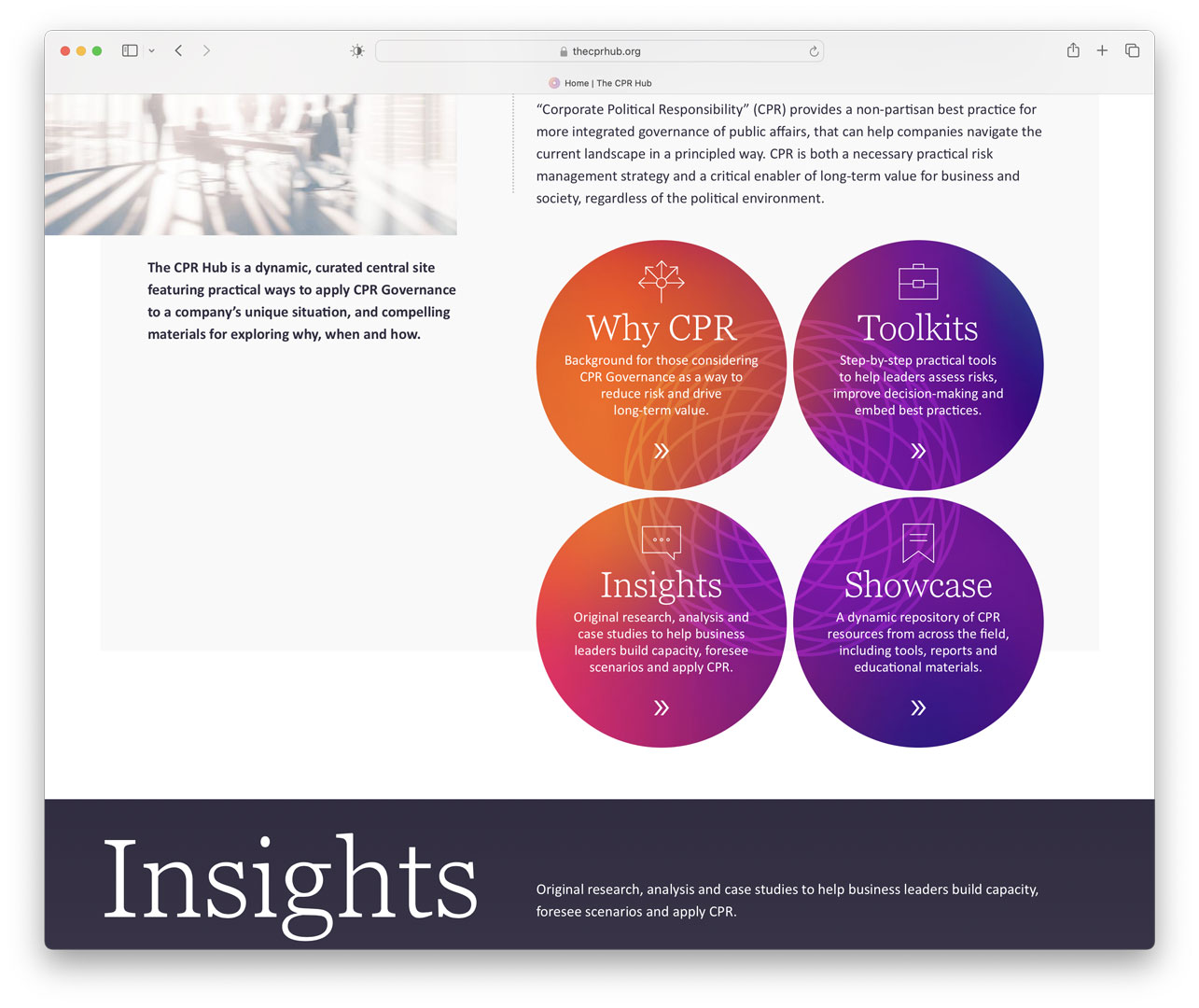
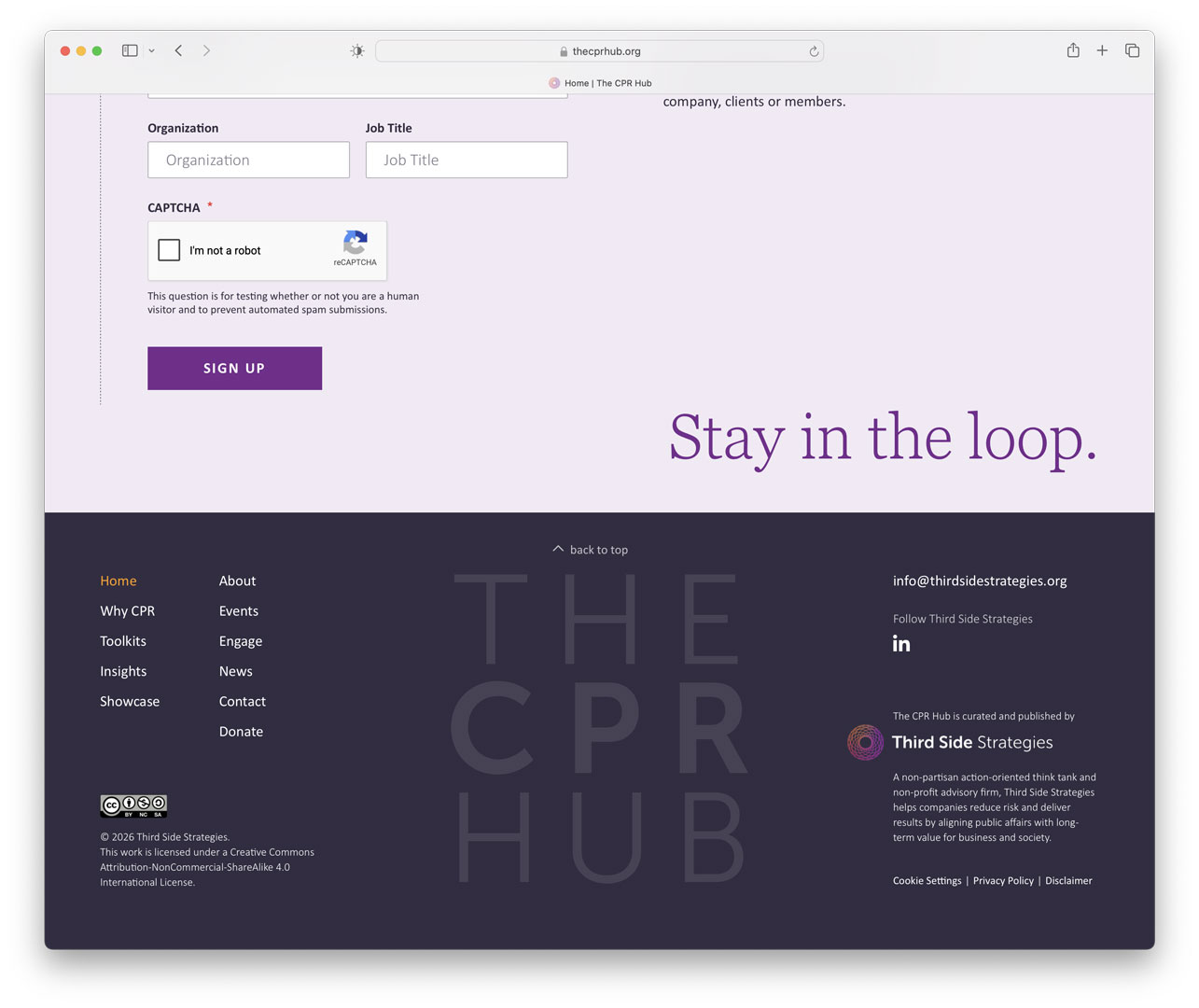
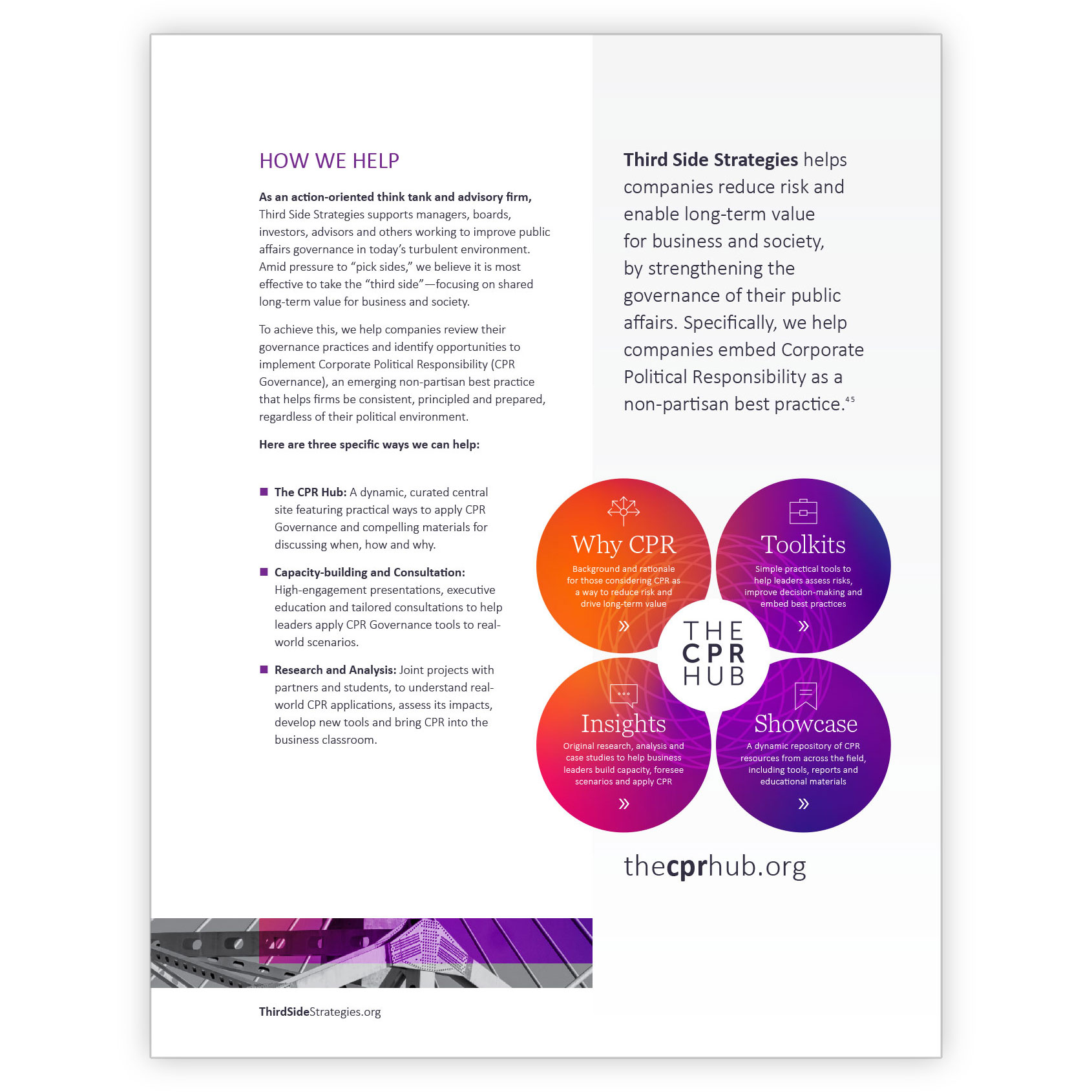
Building on the concept of a hub, Covive organized core website content into four key offerings: Why CPR, Toolkits, Insights, and a Showcase of curated resources. The hub diagram uses the spirograph, color palette, typography, and icon styles to present the primary site structure visually as an interface element and orientation tool. Website architecture utilizes a primary and secondary navigation, each with corresponding custom content types, fields, and page builder components.
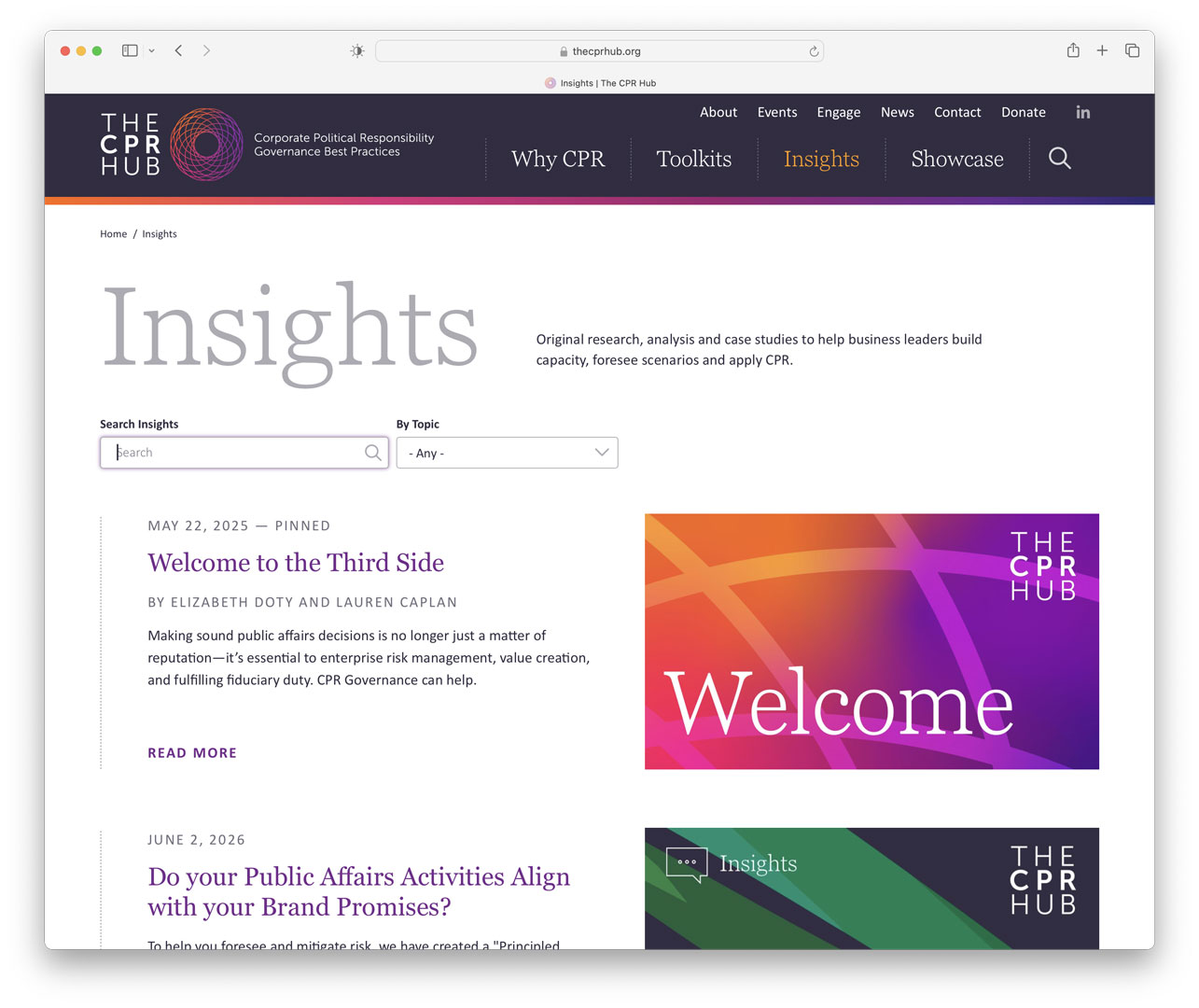
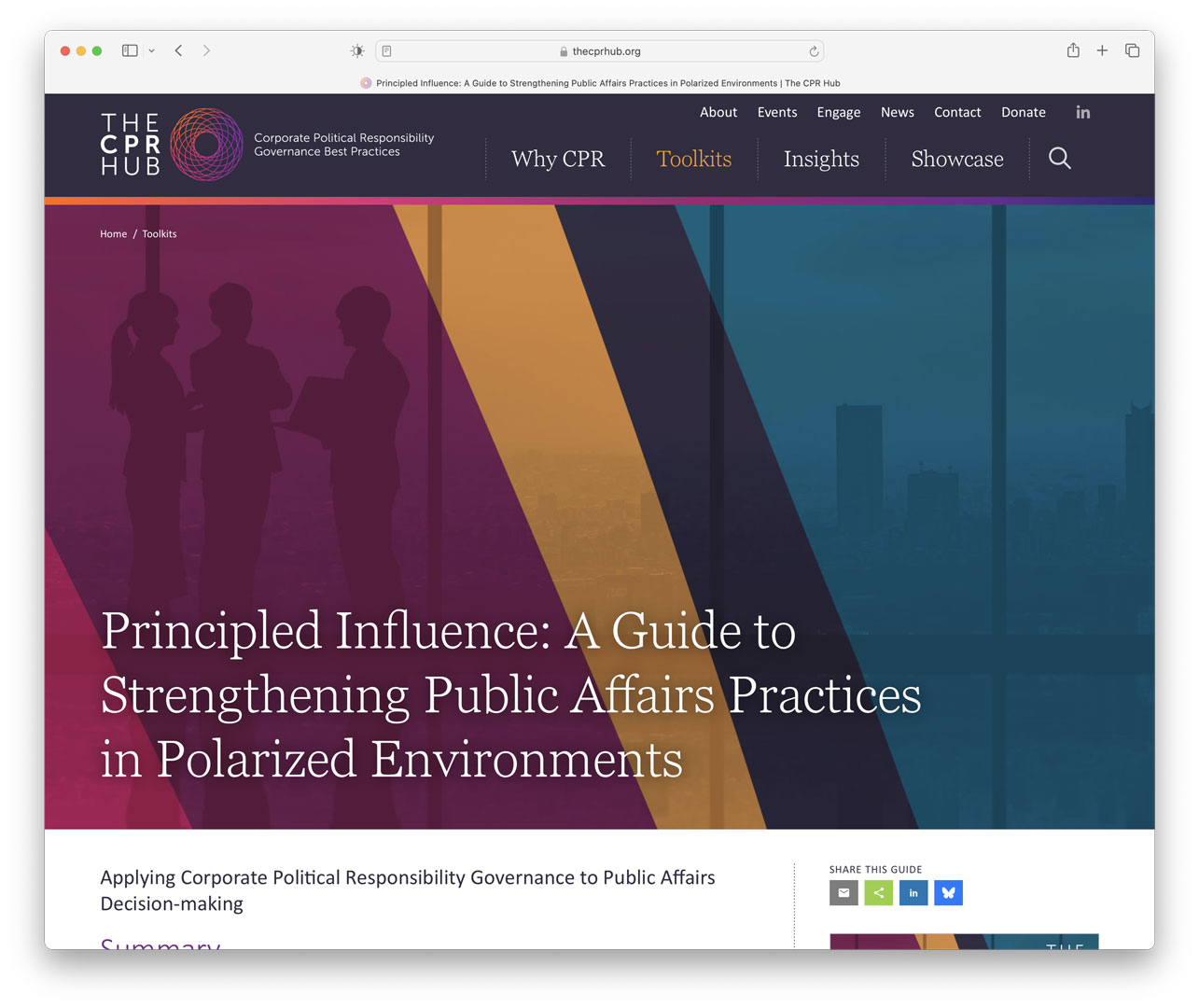
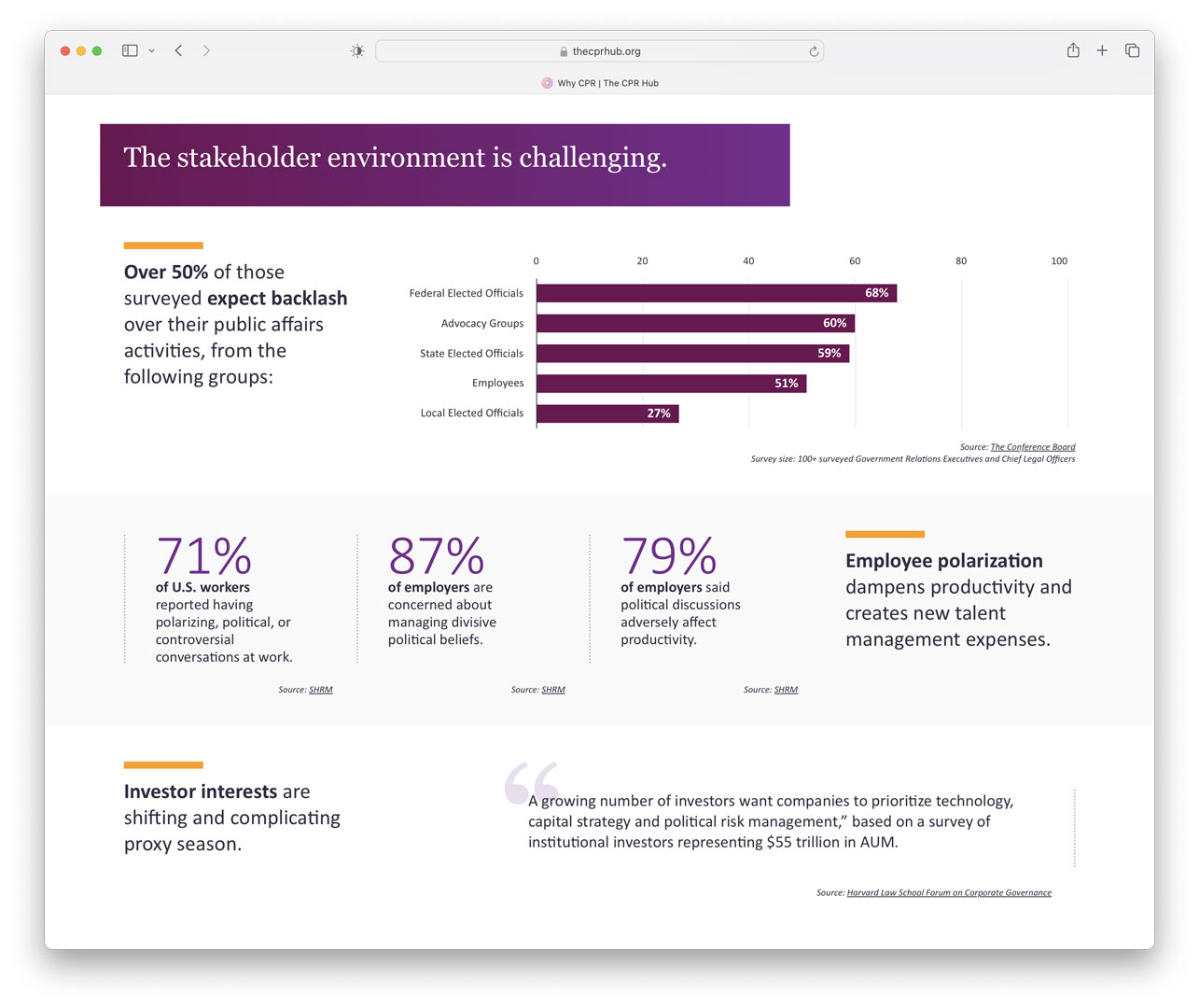
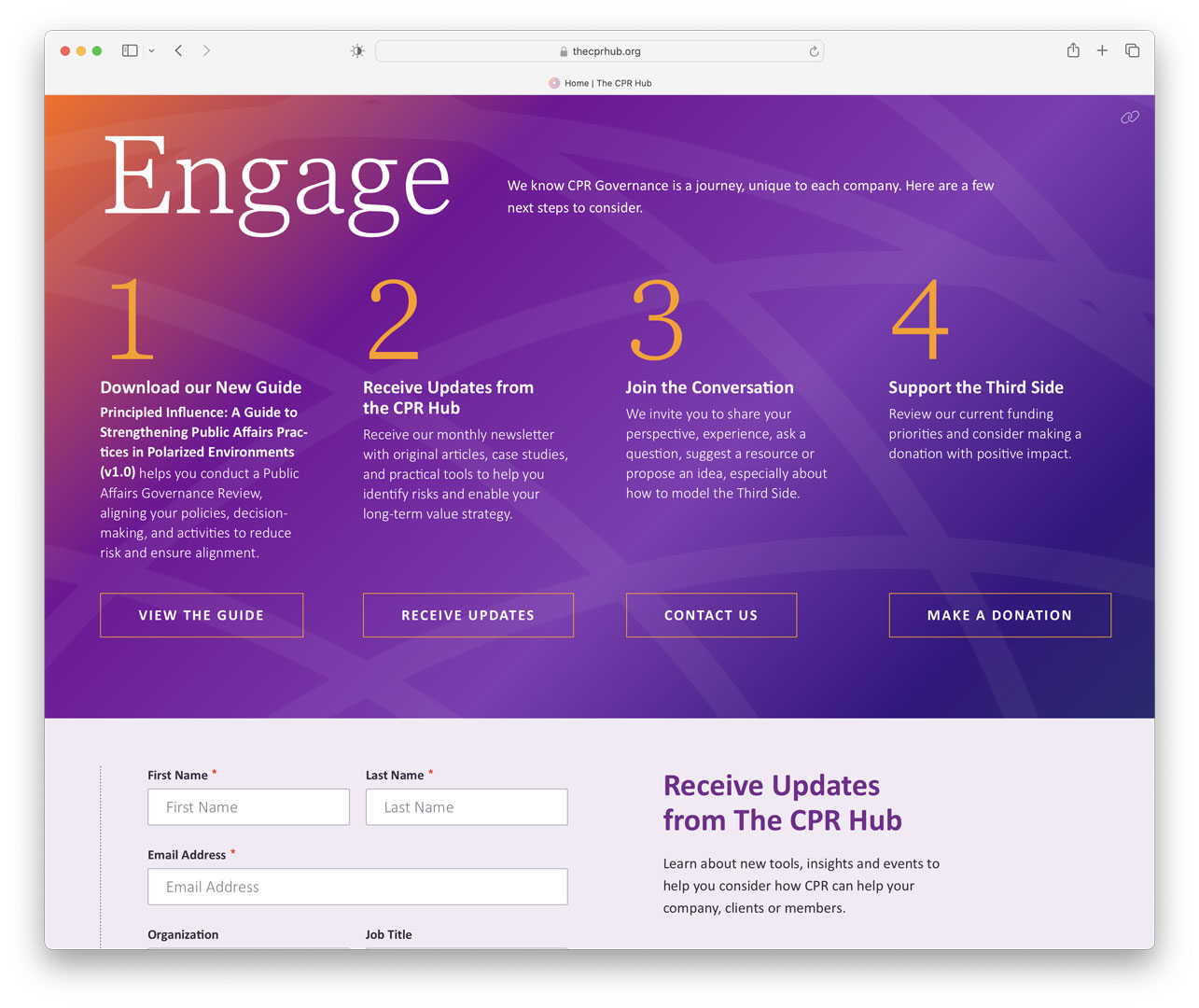
Website
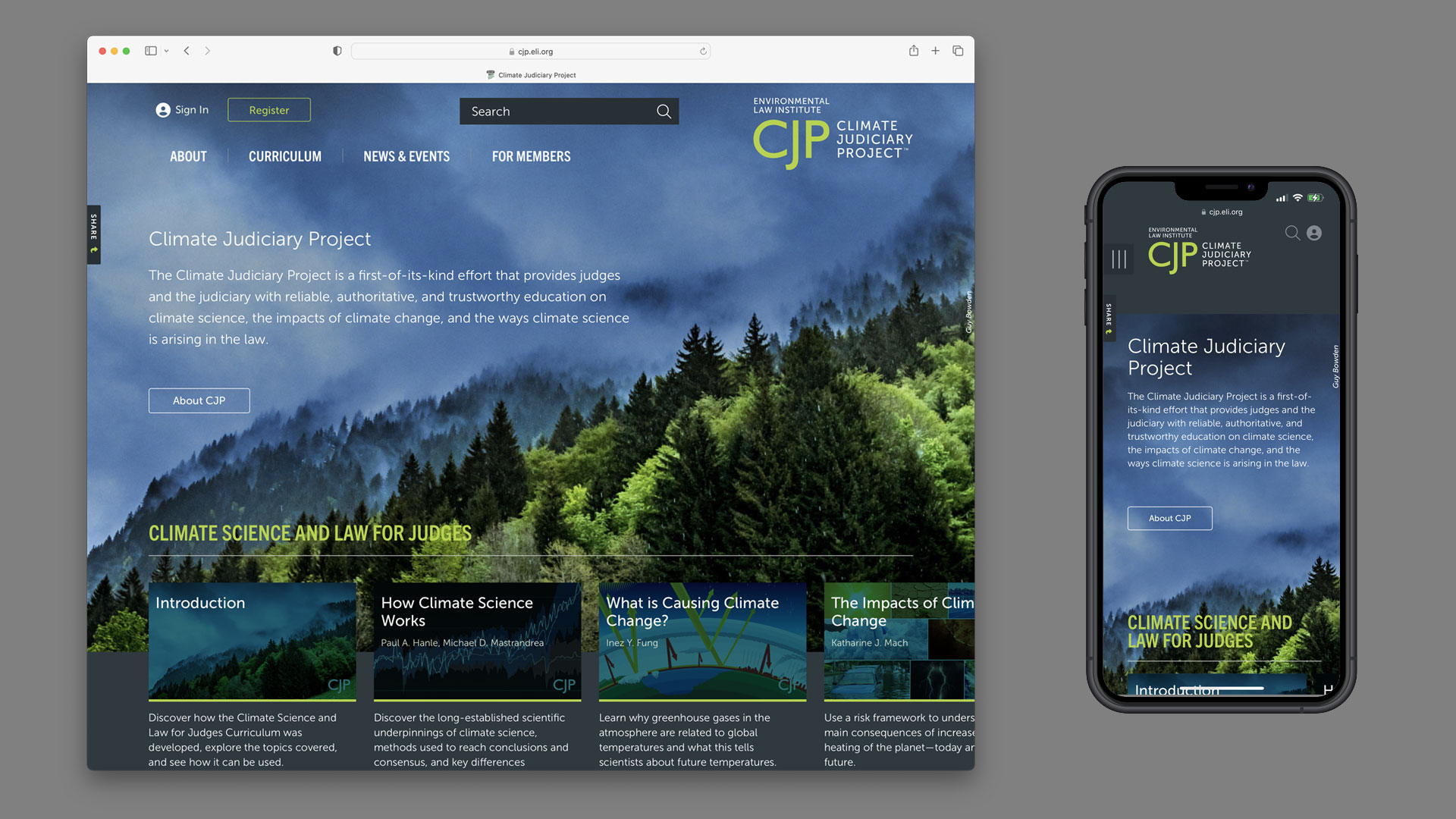
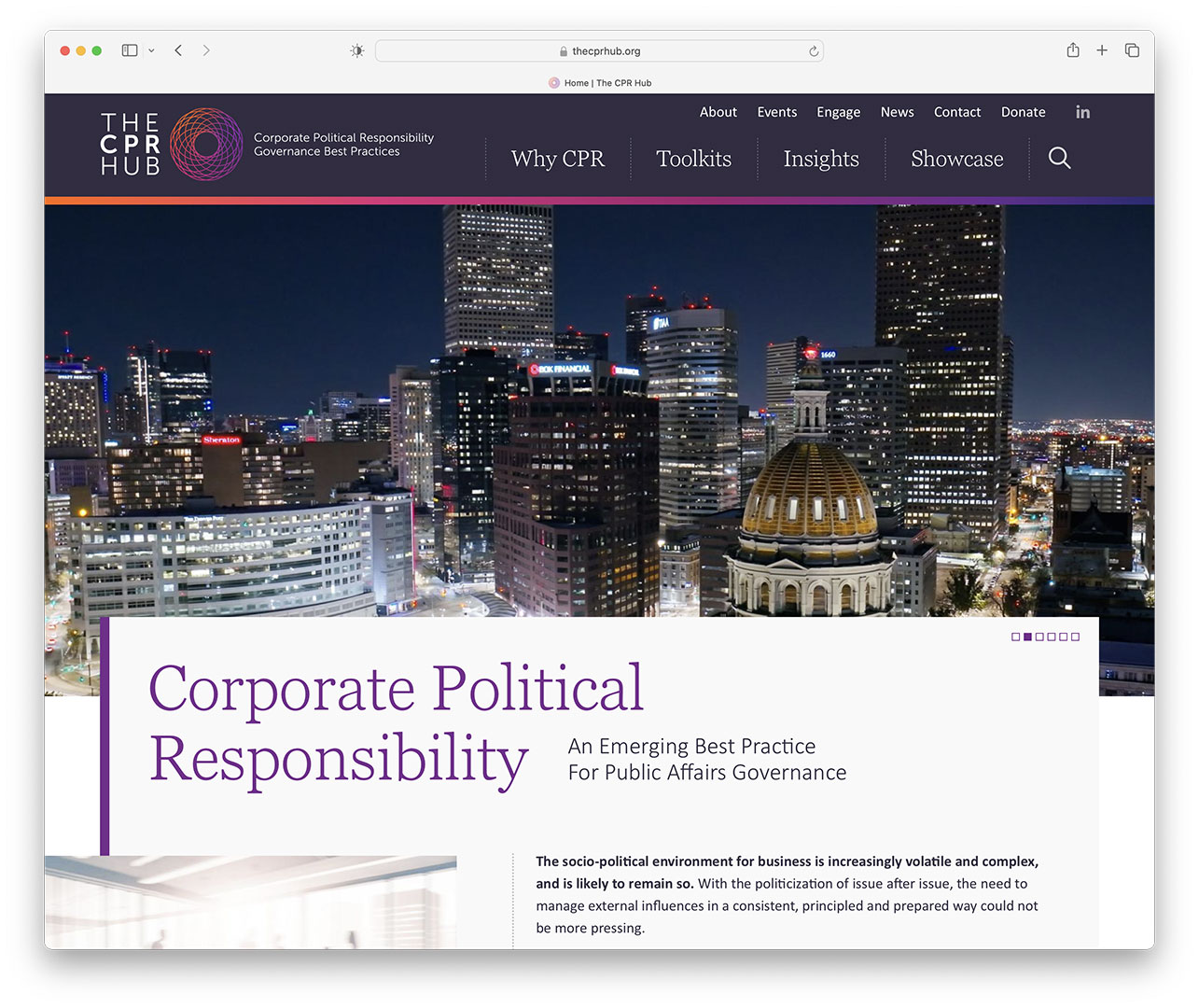
Covive designed and developed TheCPRHub.org as an online reference resource which provides orientation to the business case for CPR, curated articles authored by guest contributors, toolkits to guide corporate teams through their own assessments and decision-making, and a deep library of examples organized as a showcase of best practices and useful frameworks.
Interactive Guide Document
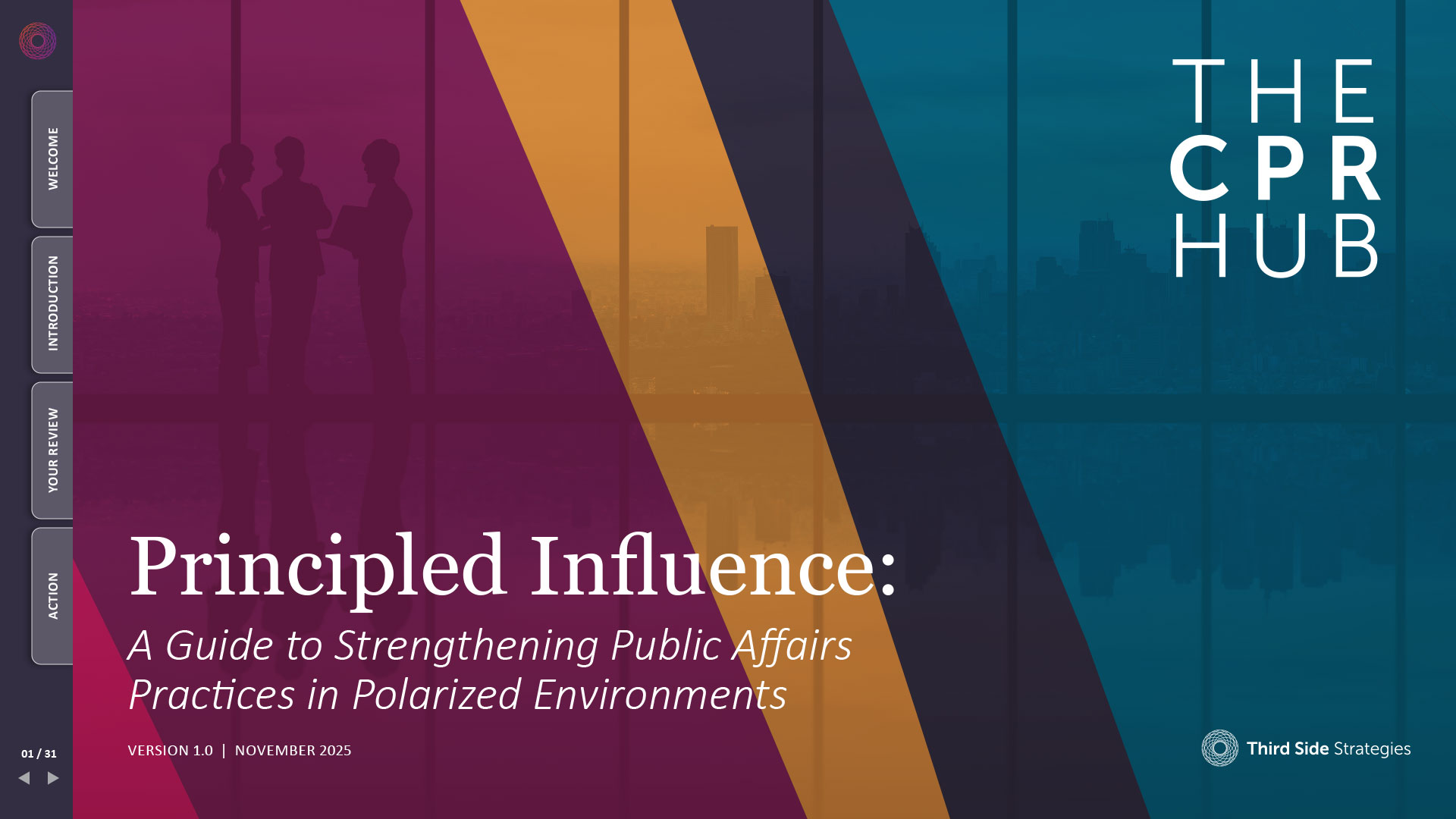
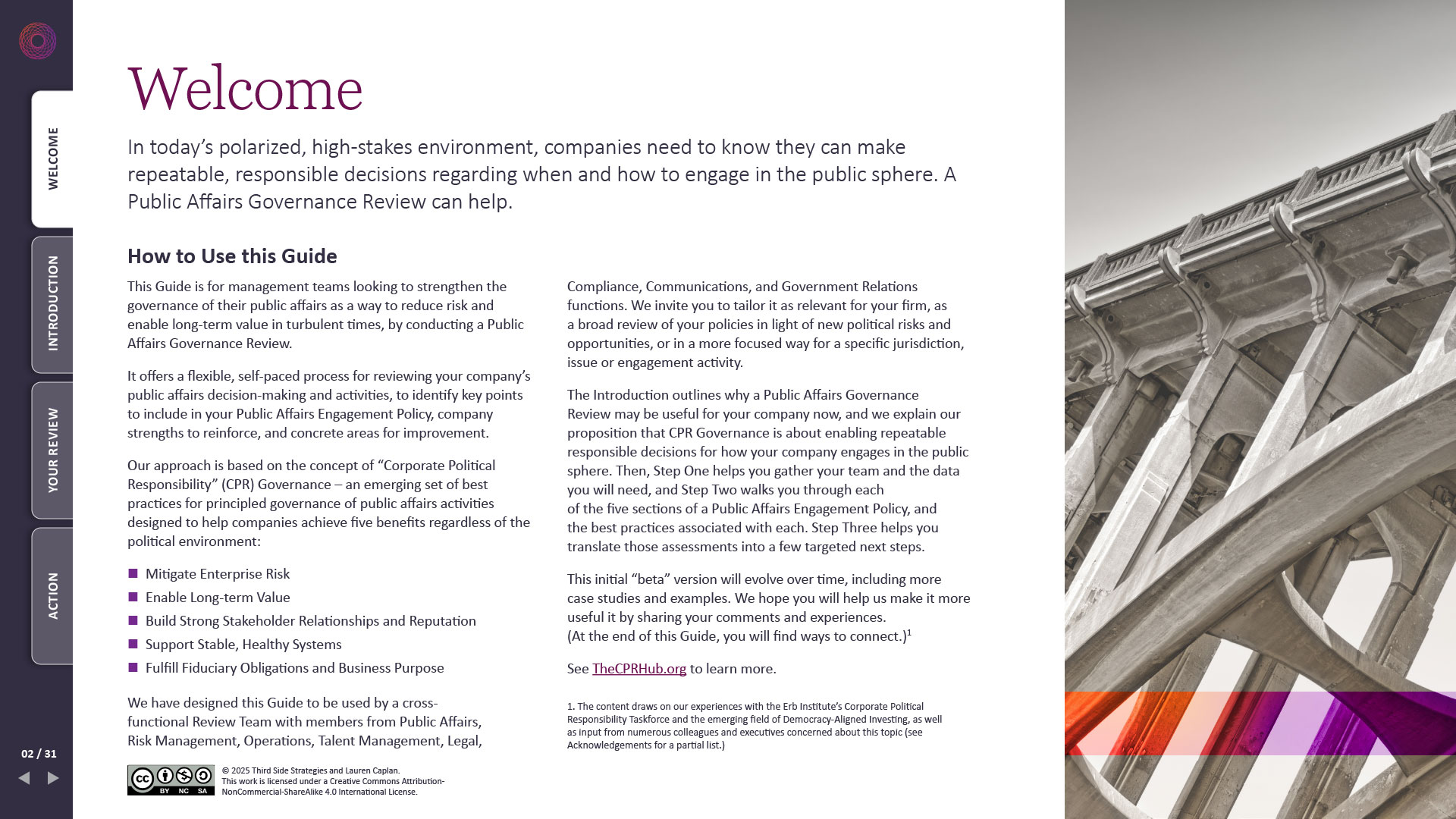
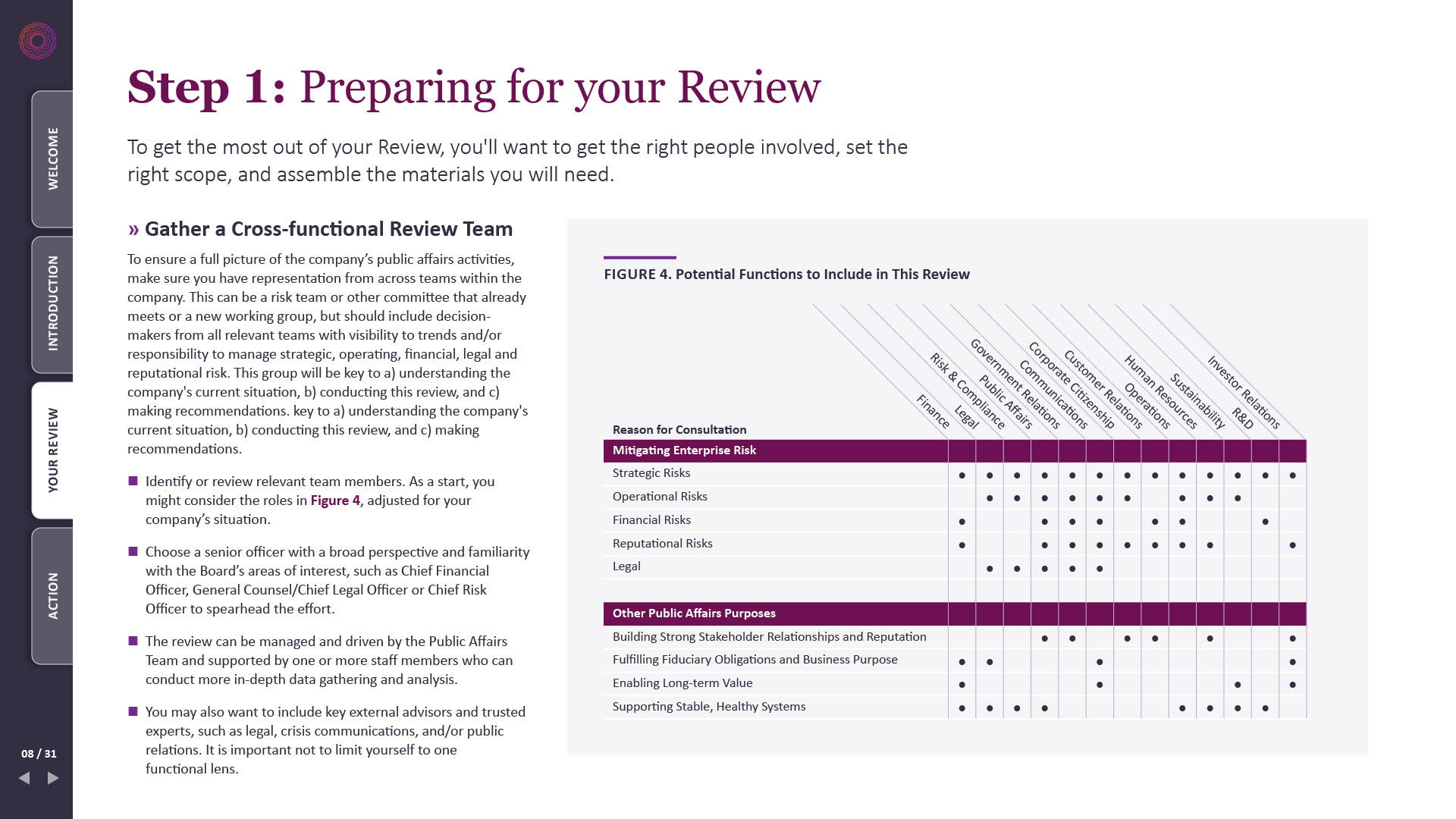
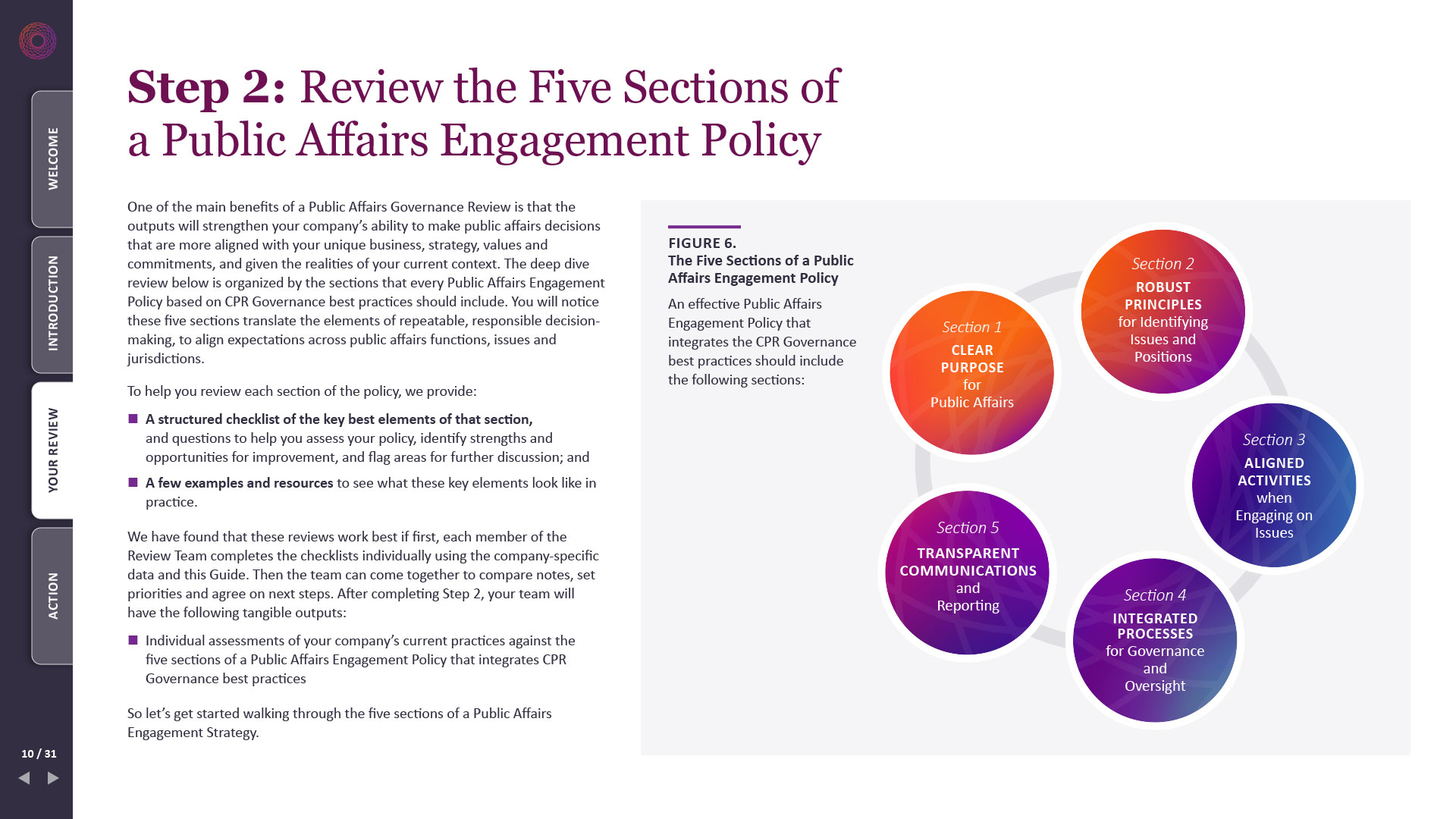
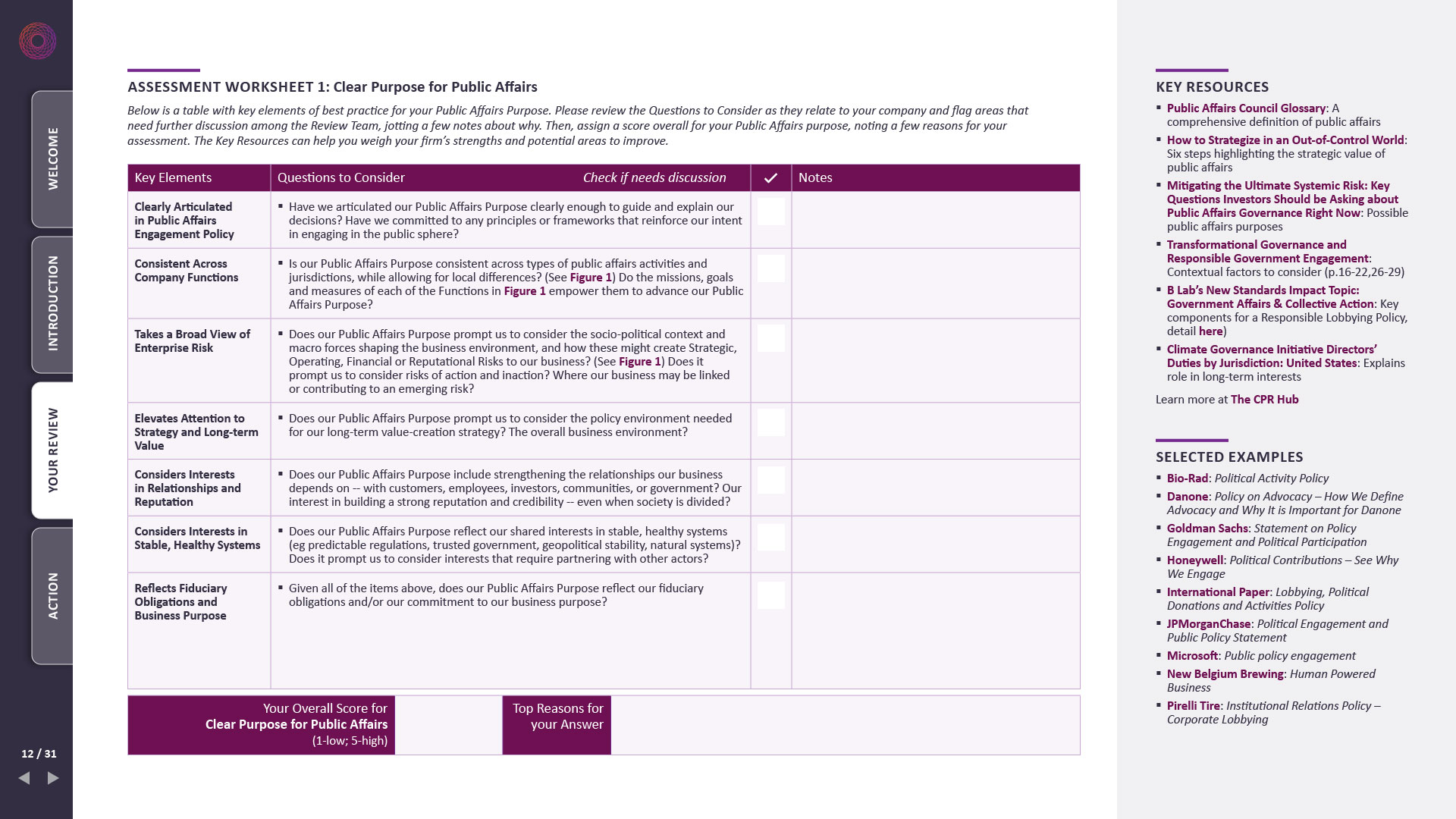
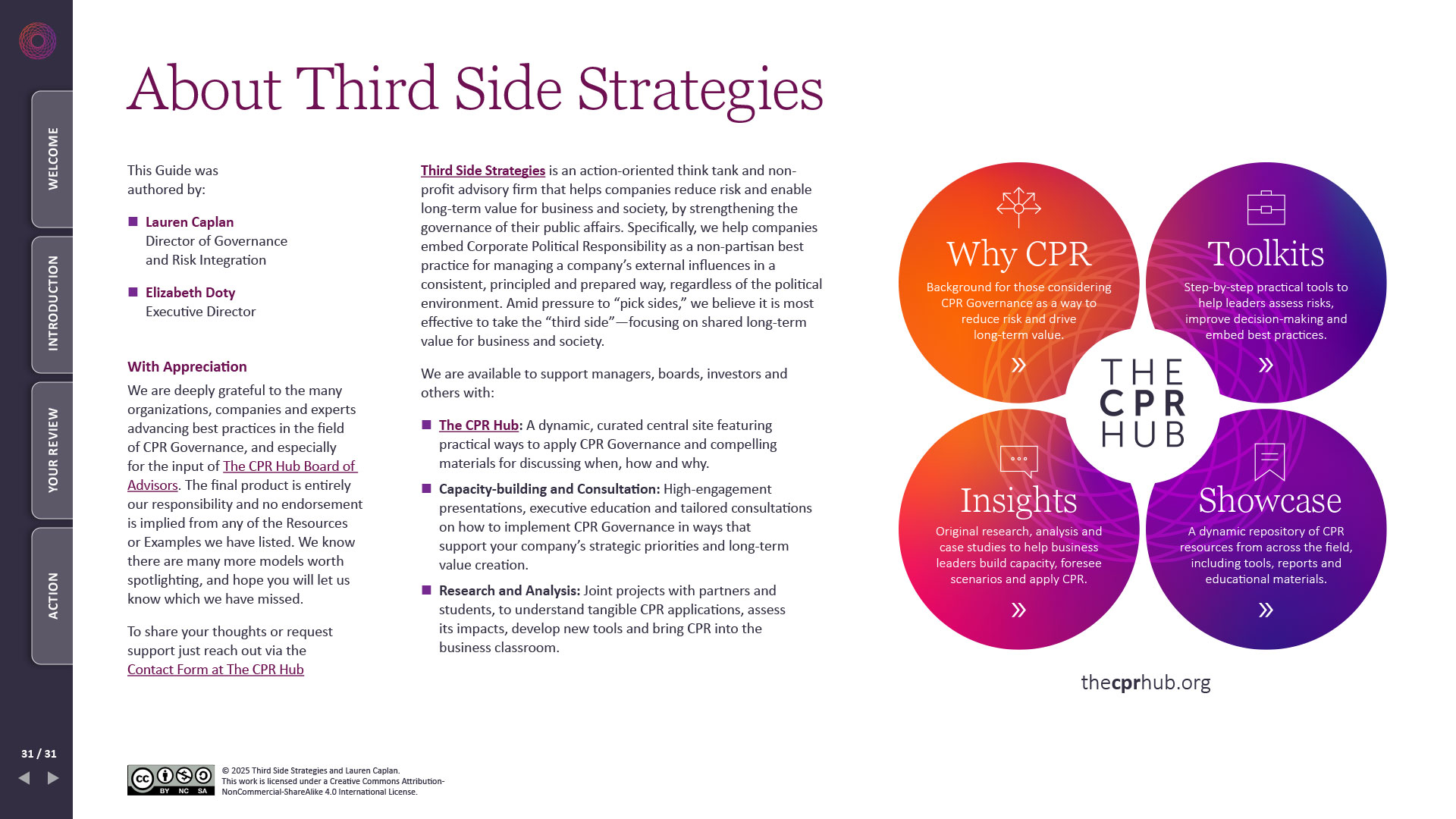
In addition to the website, one of the first major work products of the new entity is a downloadable interactive toolkit titled: Principled Influence: a Guide to Strengthening Public Affairs Practices in Polarized Environments. Covive transformed the preliminary document draft into a storyboard and full-size design template with interactive navigation, typographic hierarchy and grid, figures and tables, and fillable worksheet forms. Working with the client team we managed multiple rounds of revisions and refinements to deliver a first version which was introduced to executives through webinars and email newsletter.
Leave-behinds and Event Materials
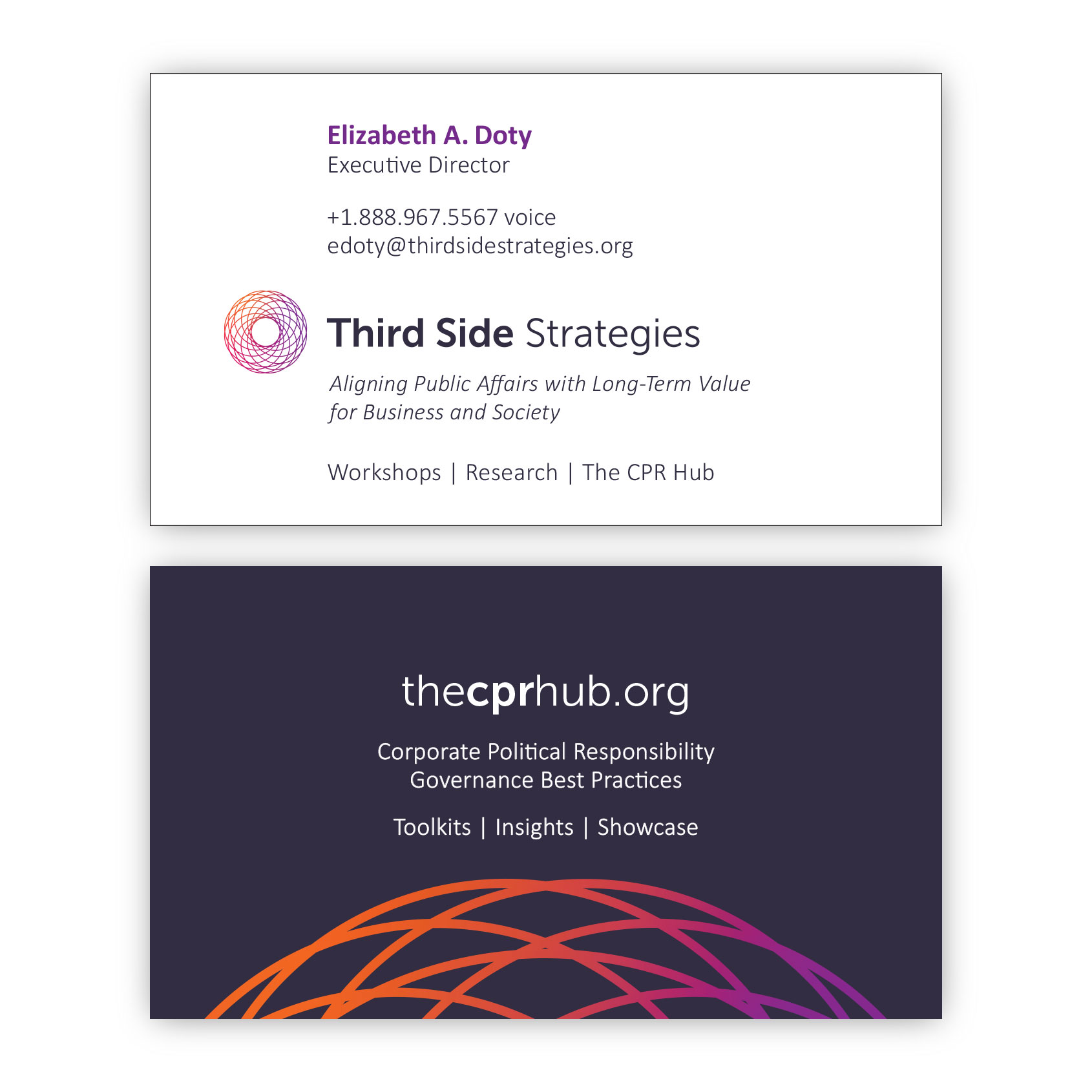
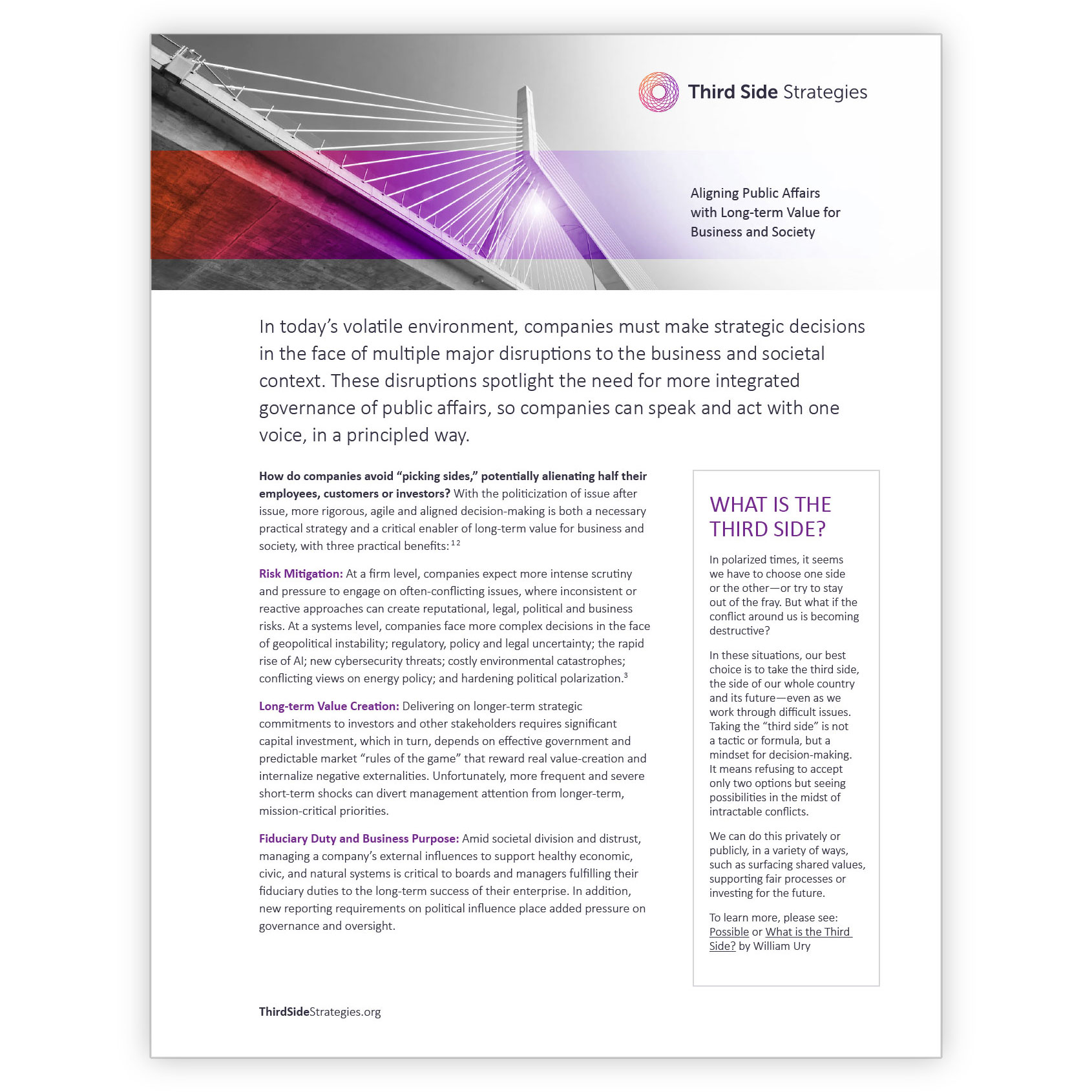
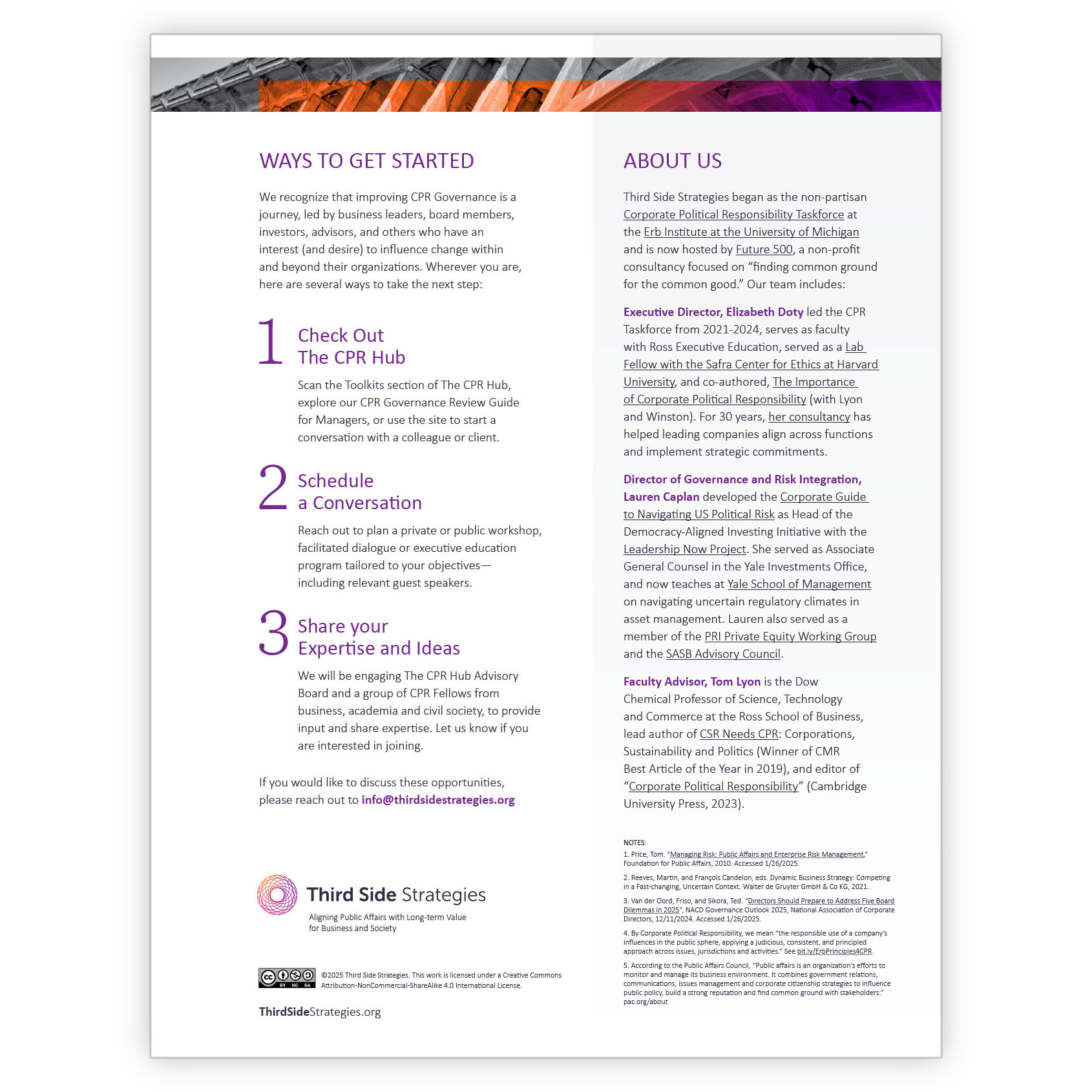
While many business conversations and trainings have been conducted via conference call in recent years, Third Side Strategies does have a presence at conferences and symposiums, where business cards and an information sheet handout are useful for making connections. Covive designed these printed materials to be clear, credible, refreshing, and not overwhelming.
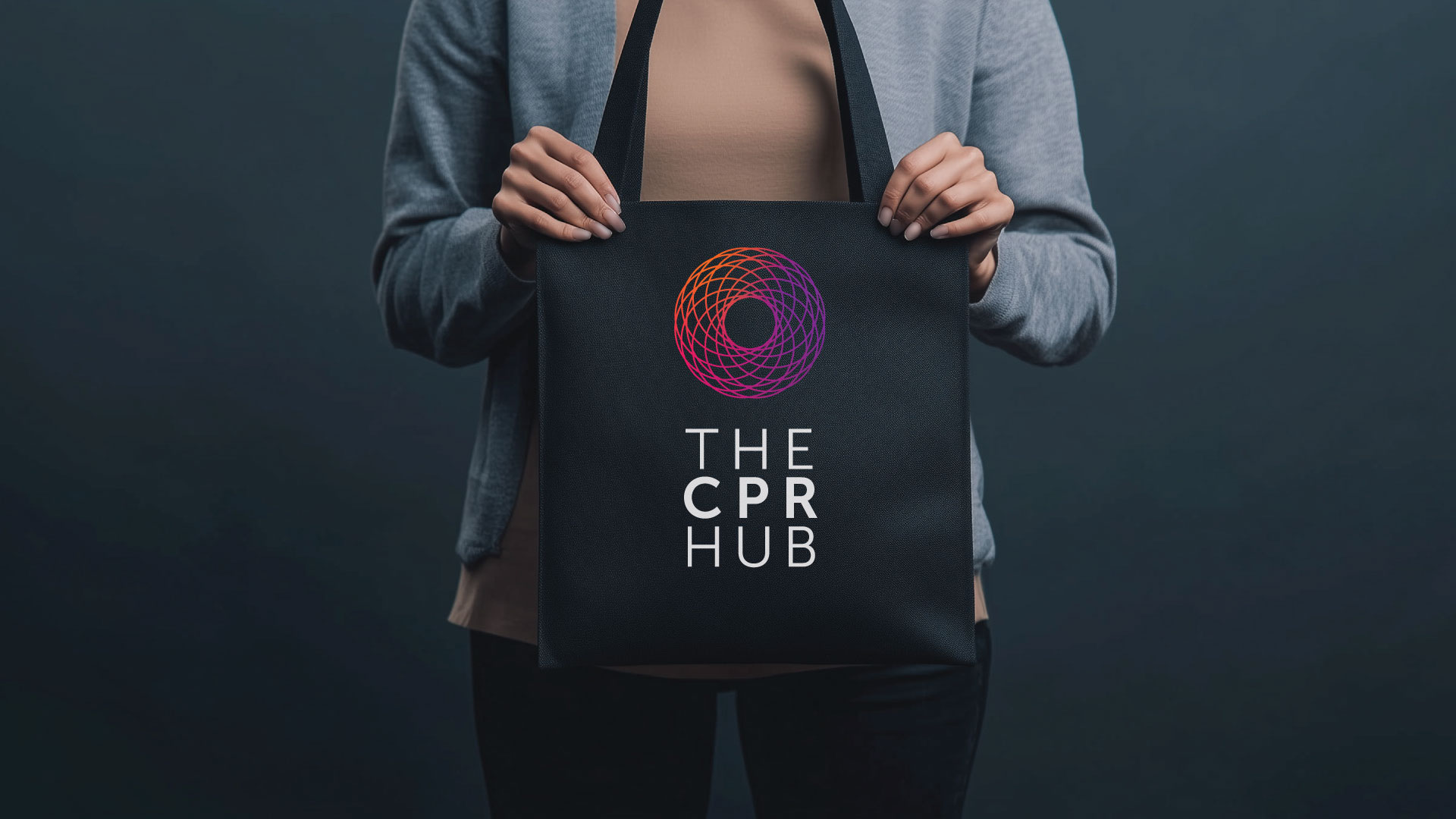
As part of the brand spirograph pitch, Covive designed an identity for a hypothetical Corporate Political Responsibility conference, demonstrating how The CPR Hub logo might apply to a sleek branded tote bag.
Starter Presentation and Template Guidelines
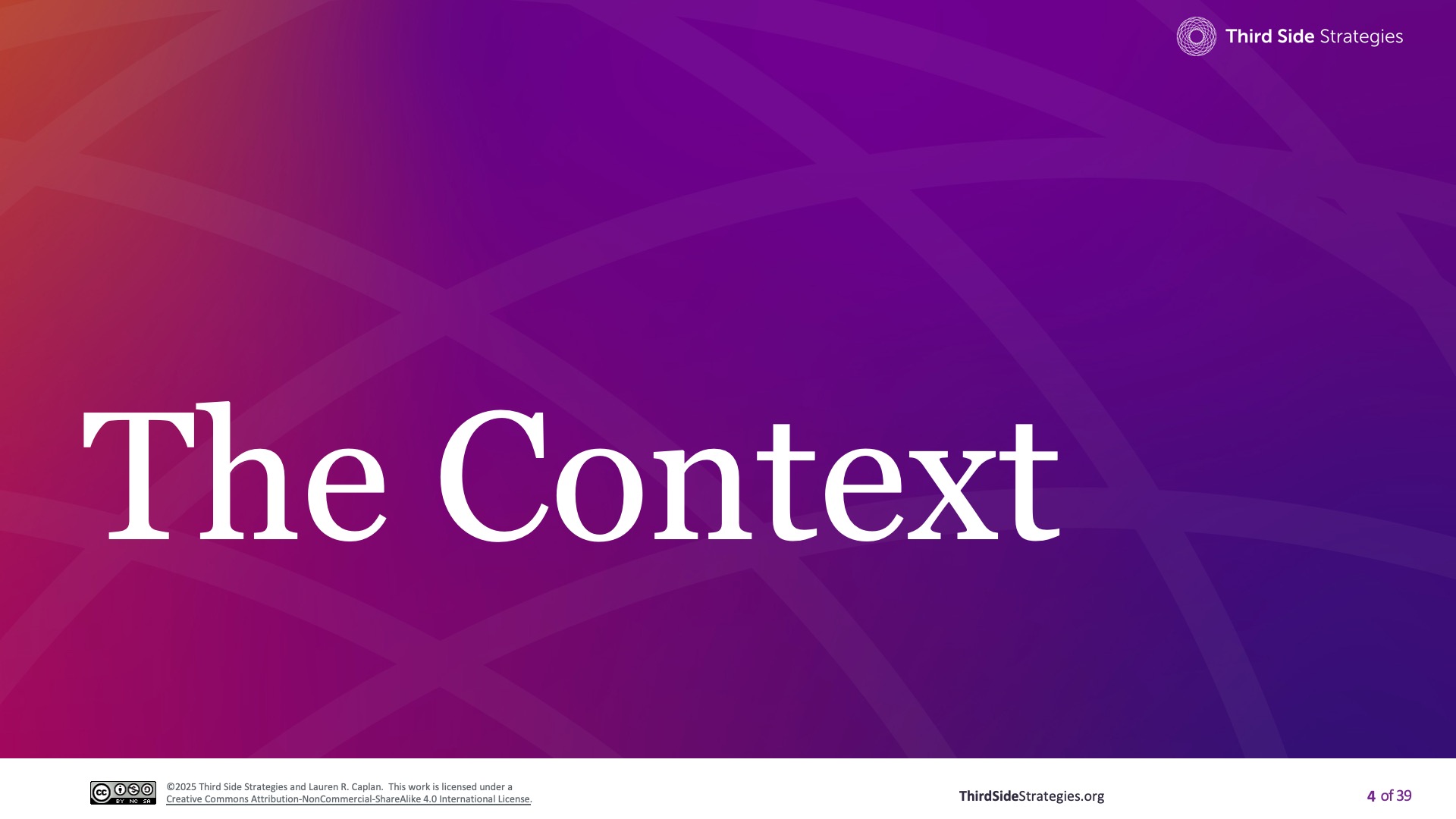
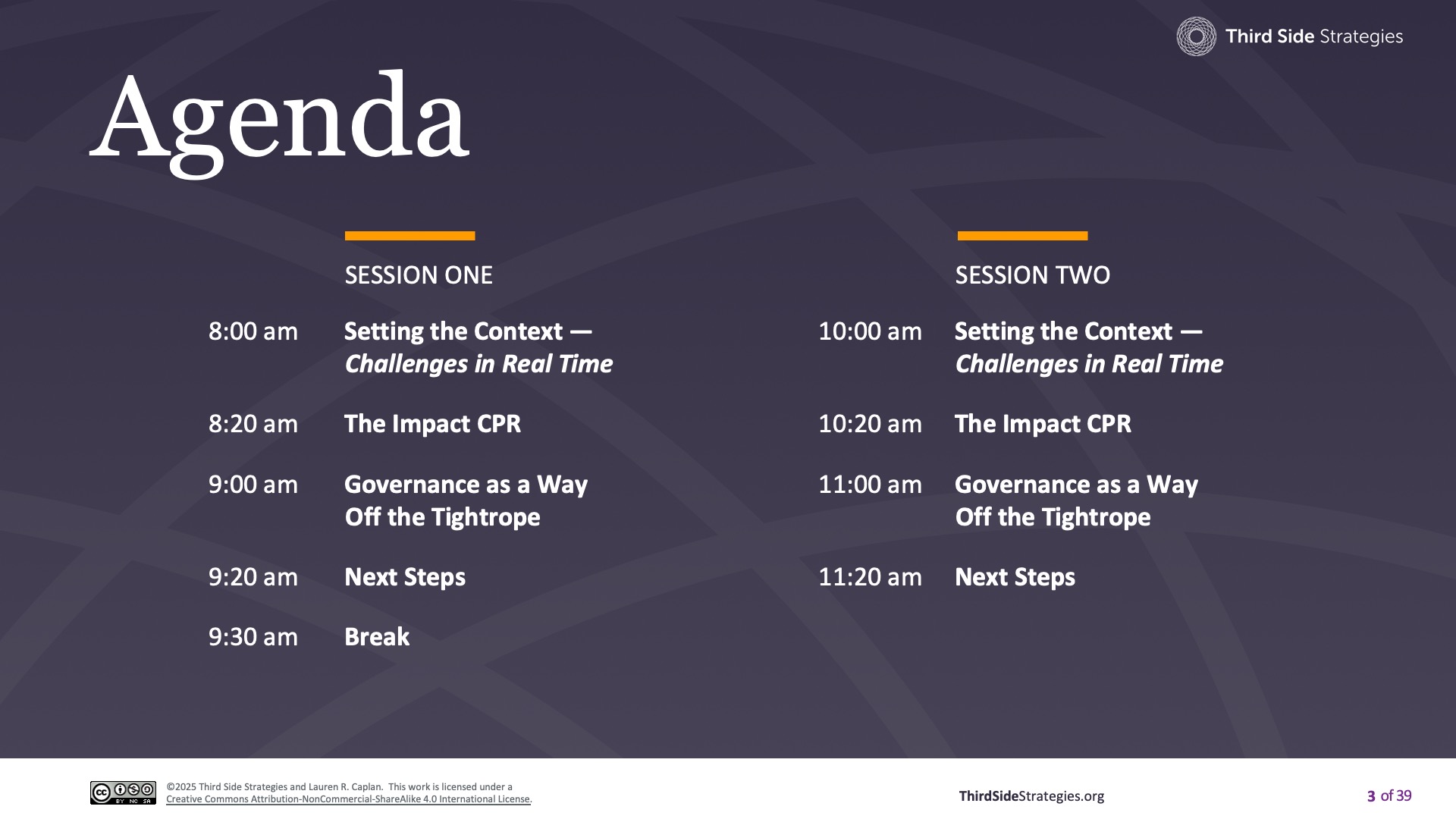
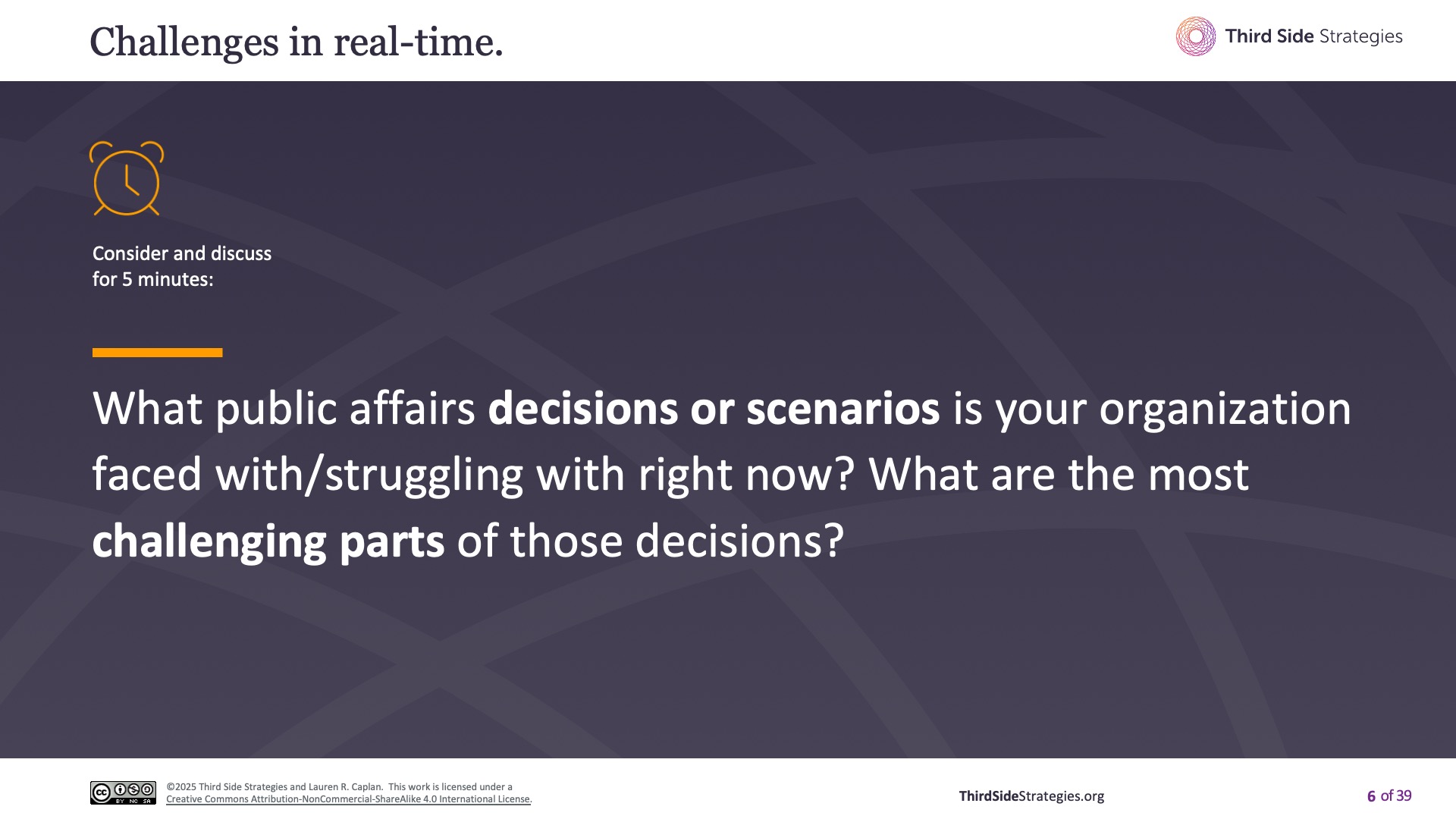
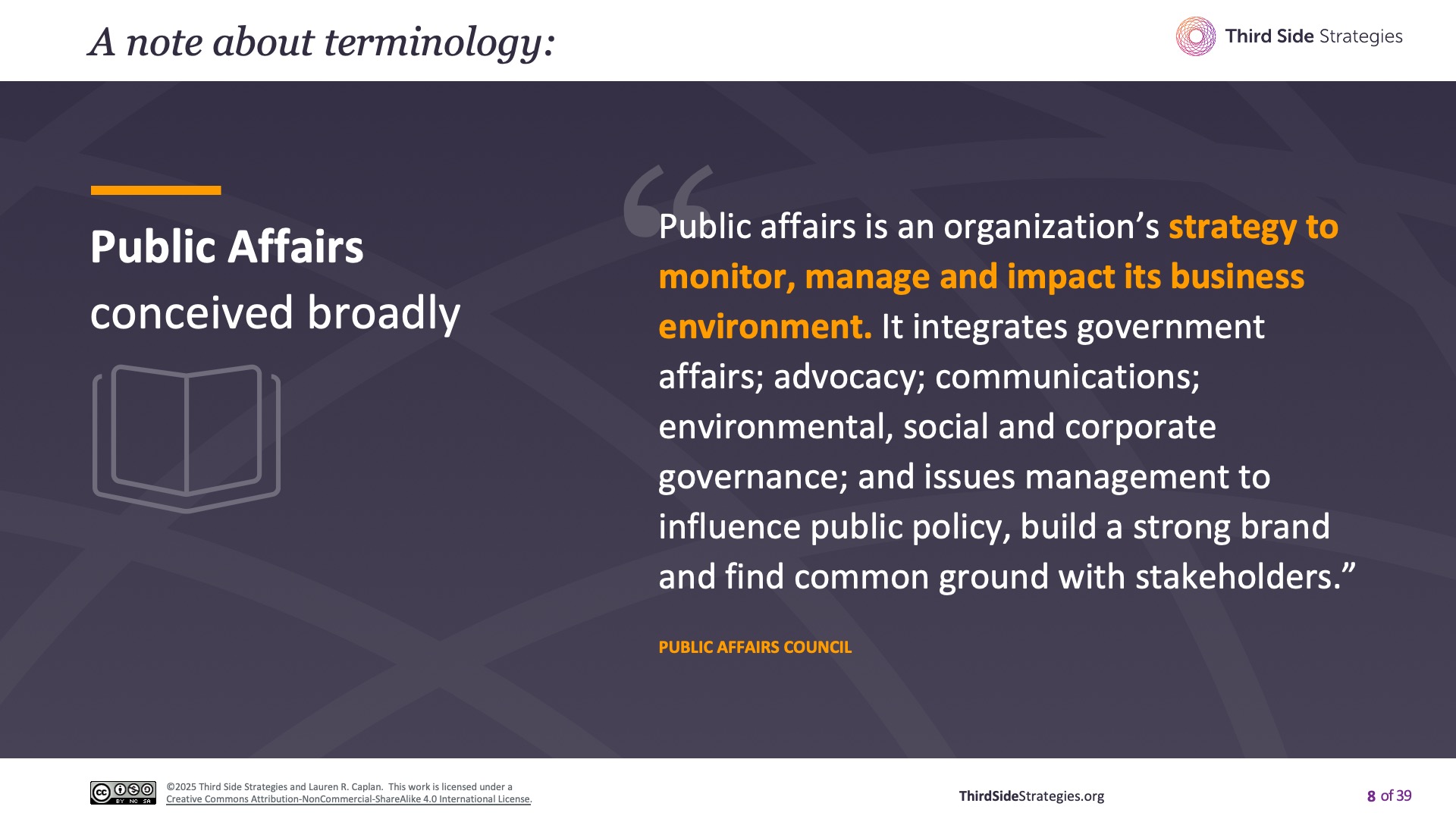
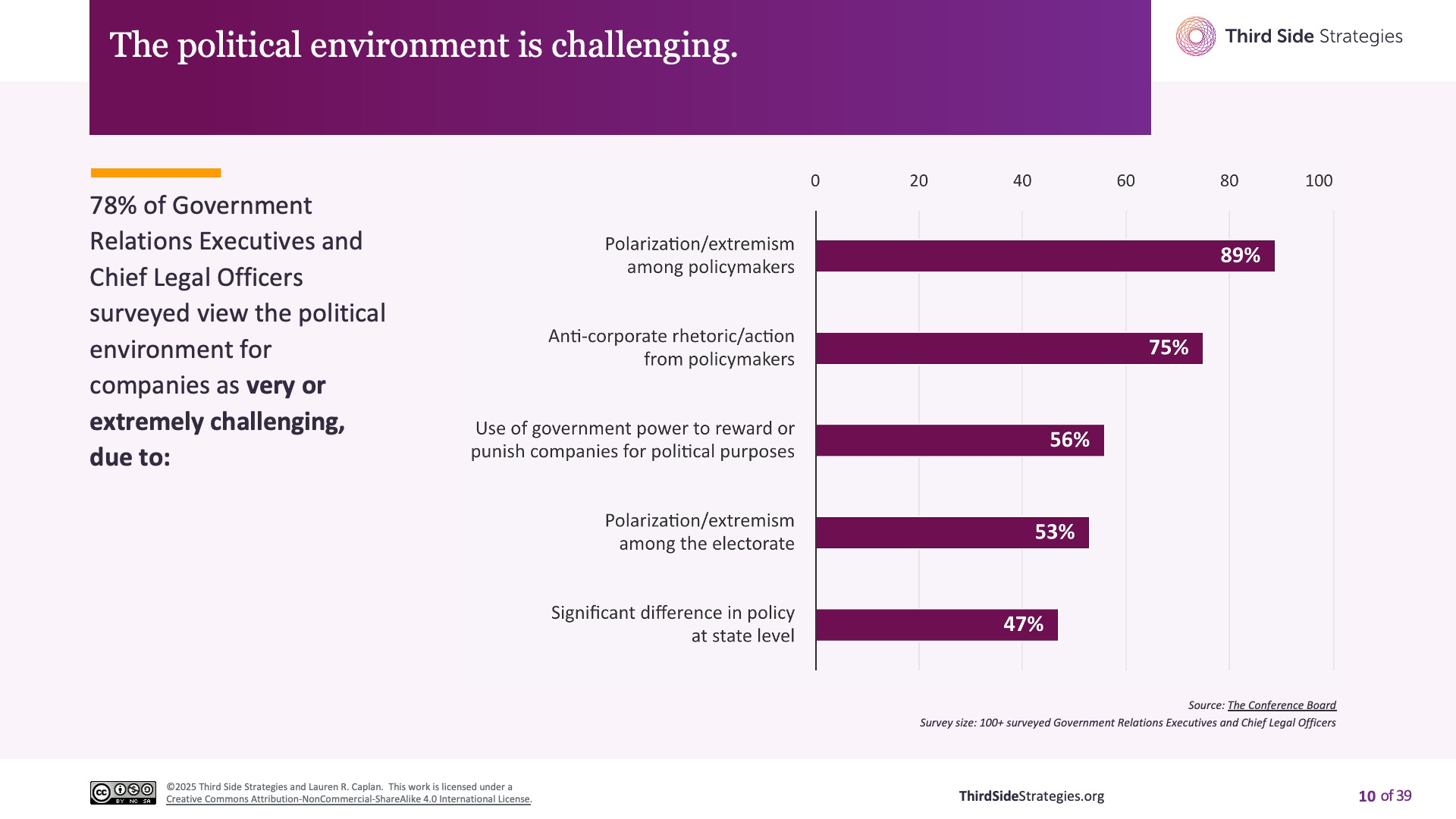
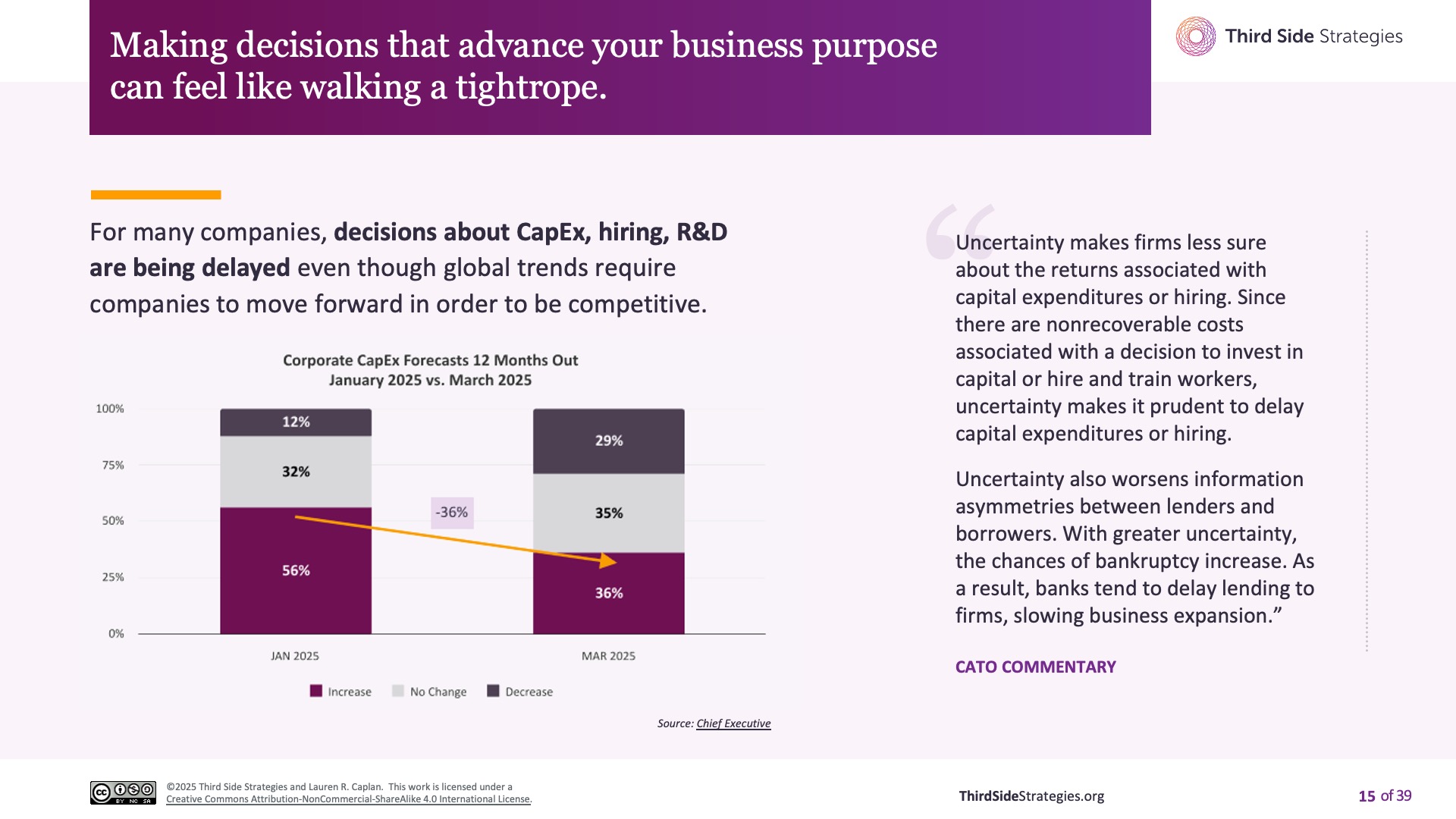
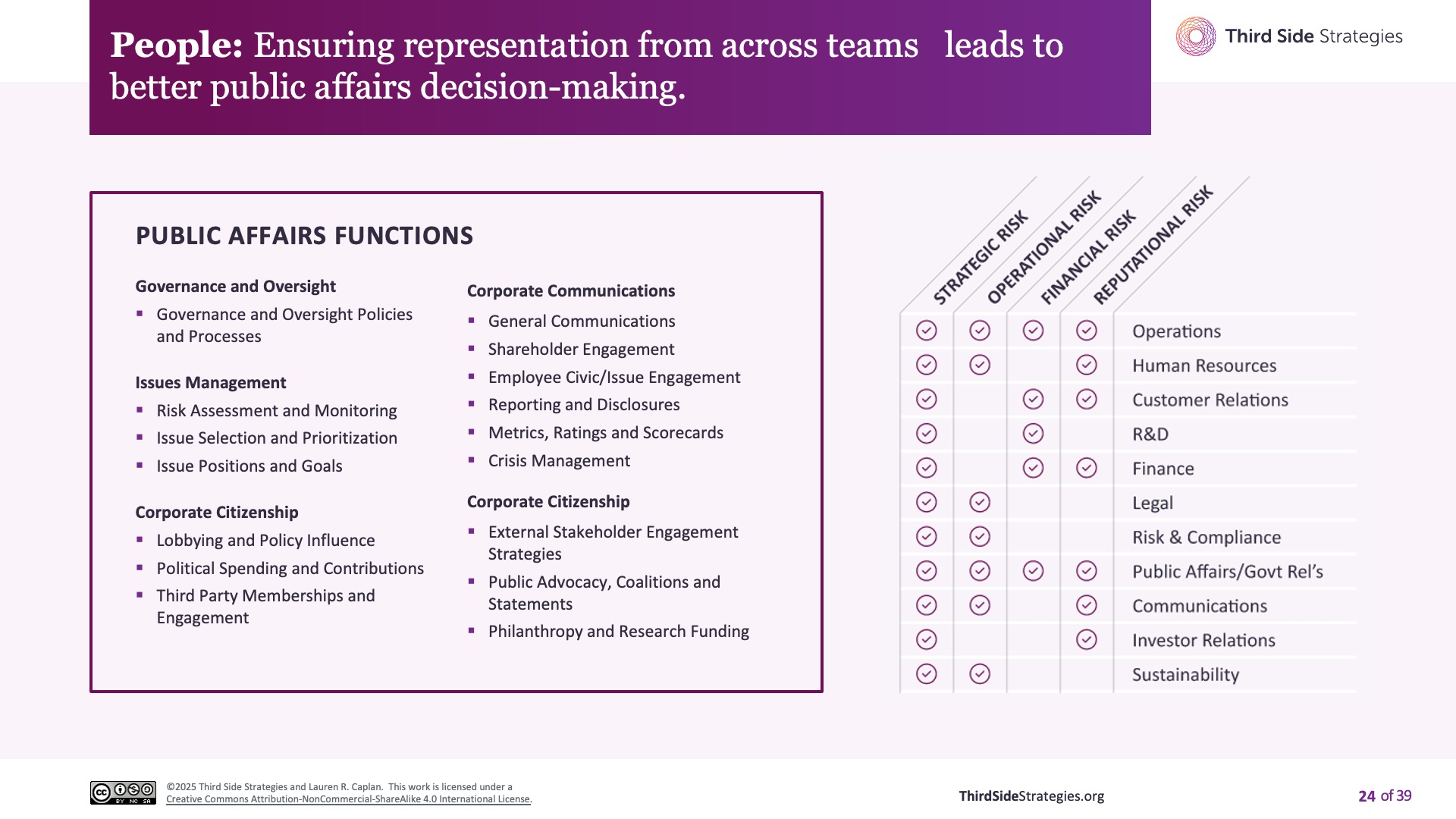
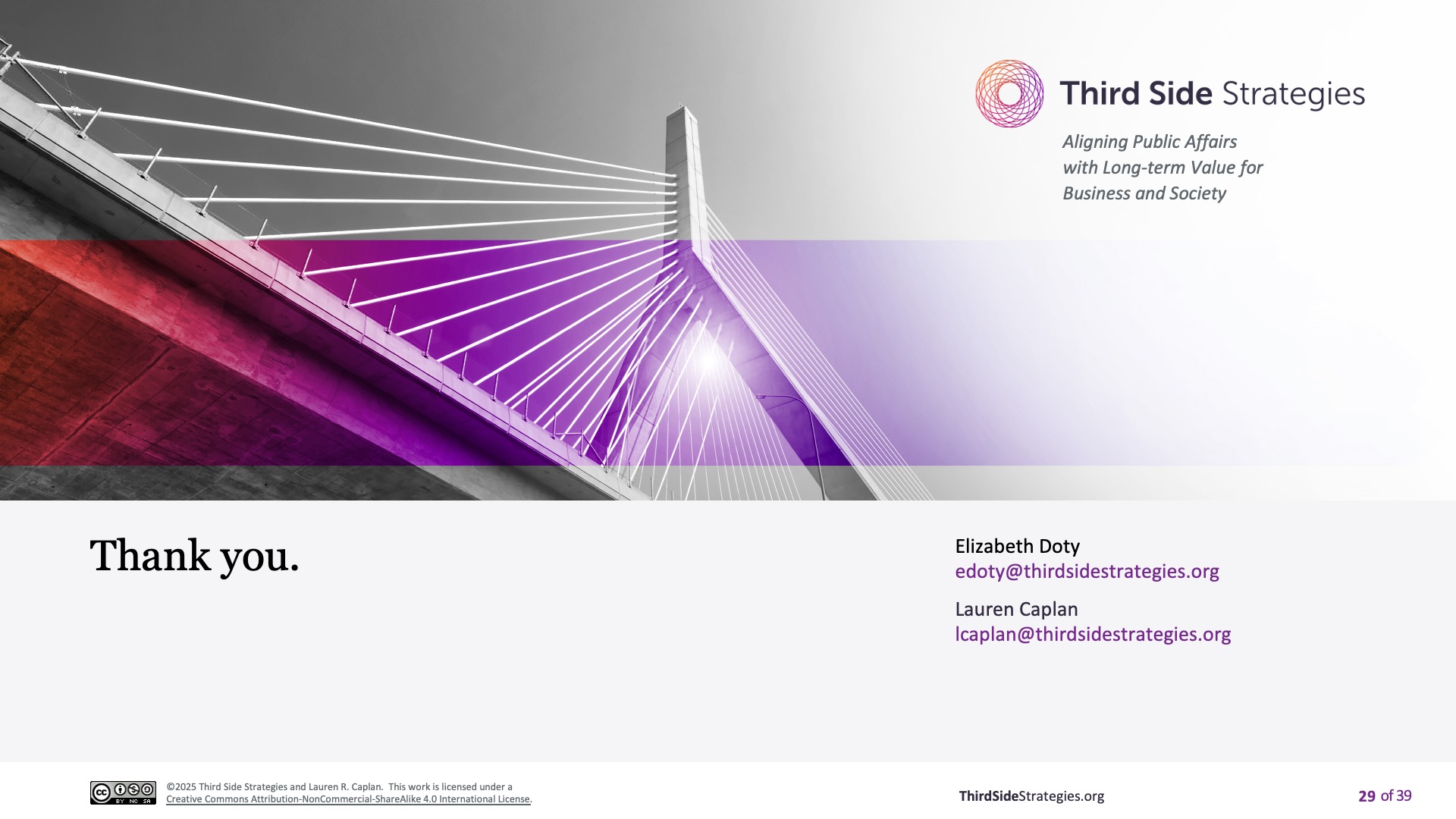
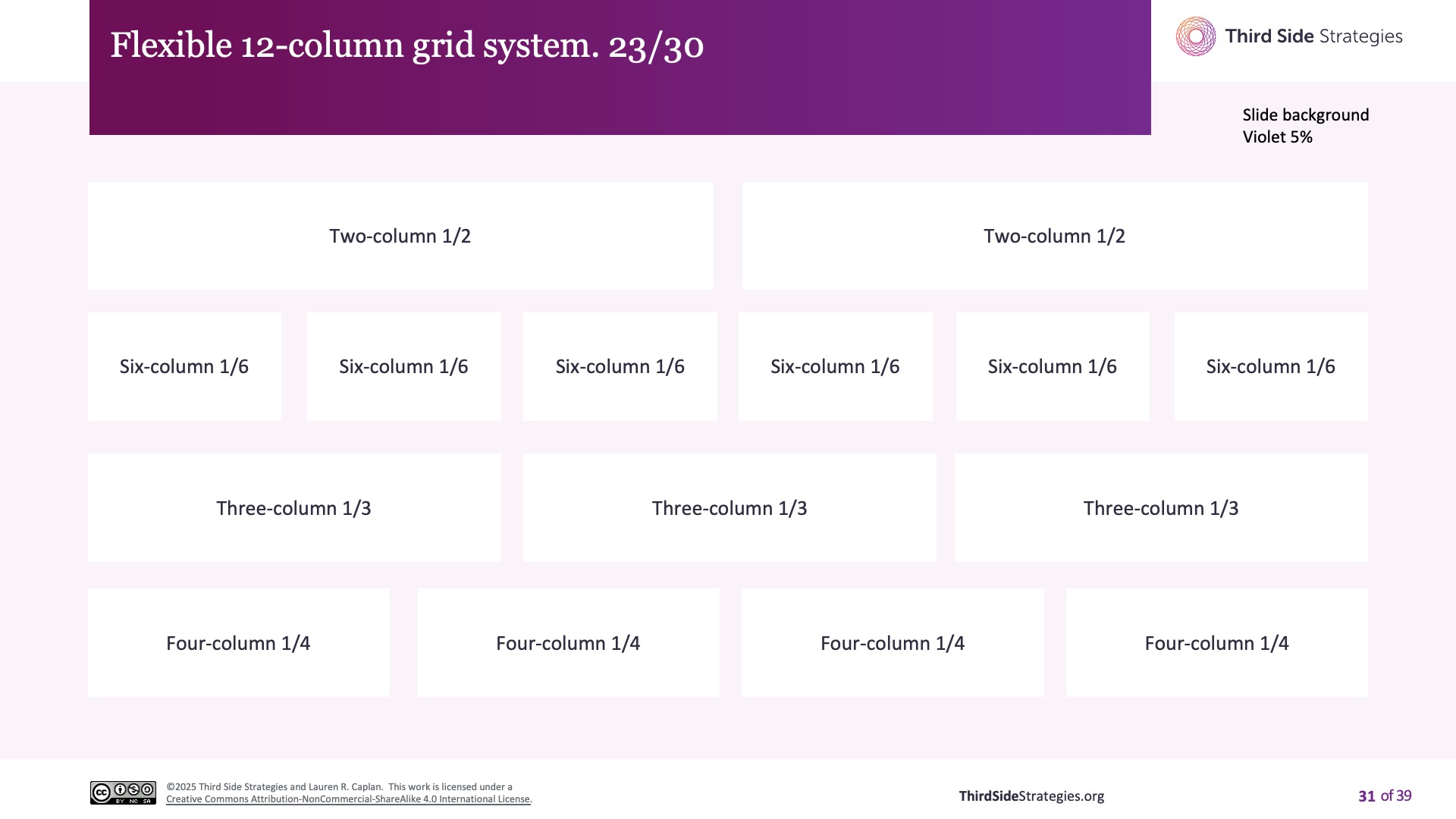
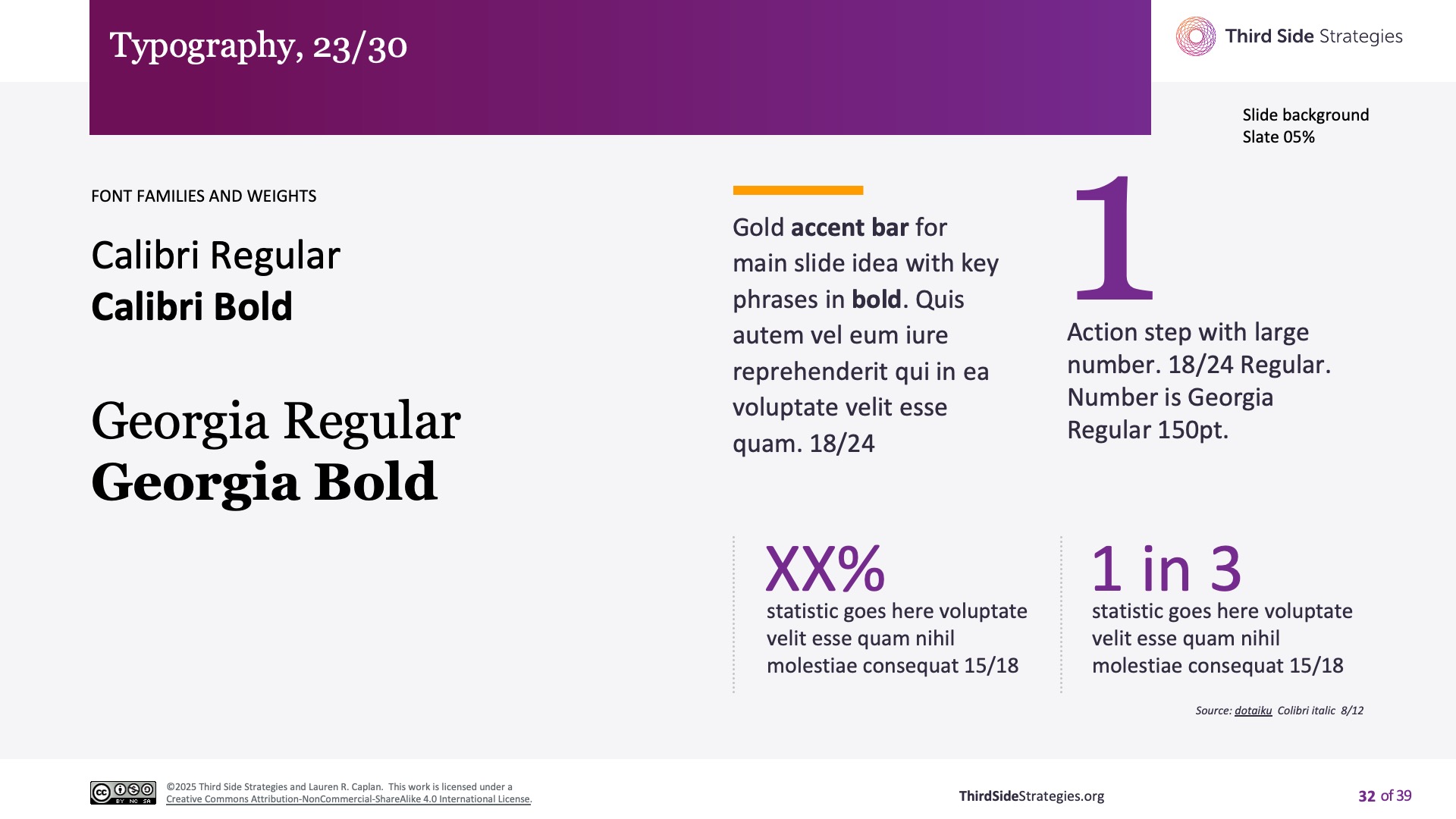
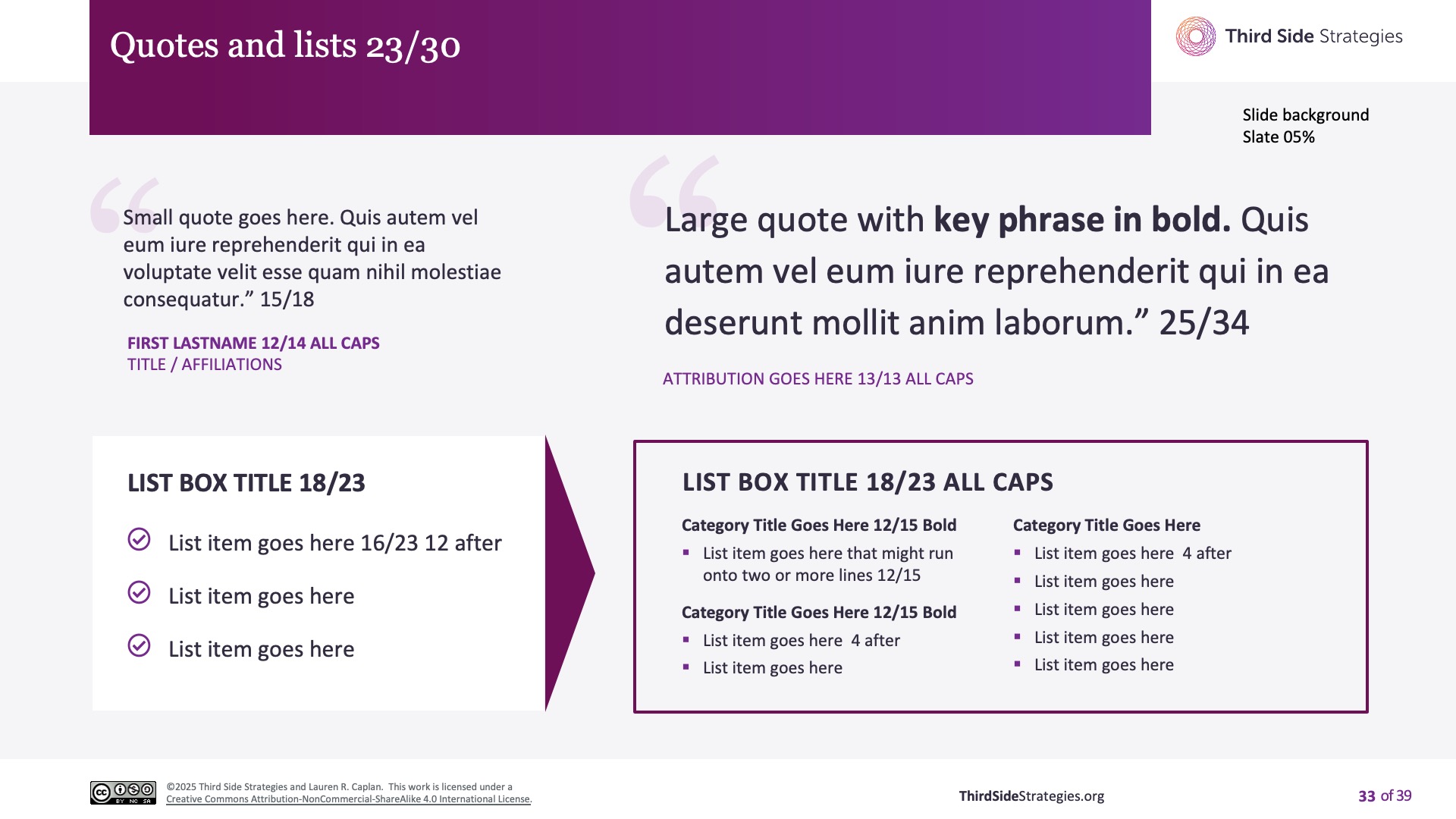
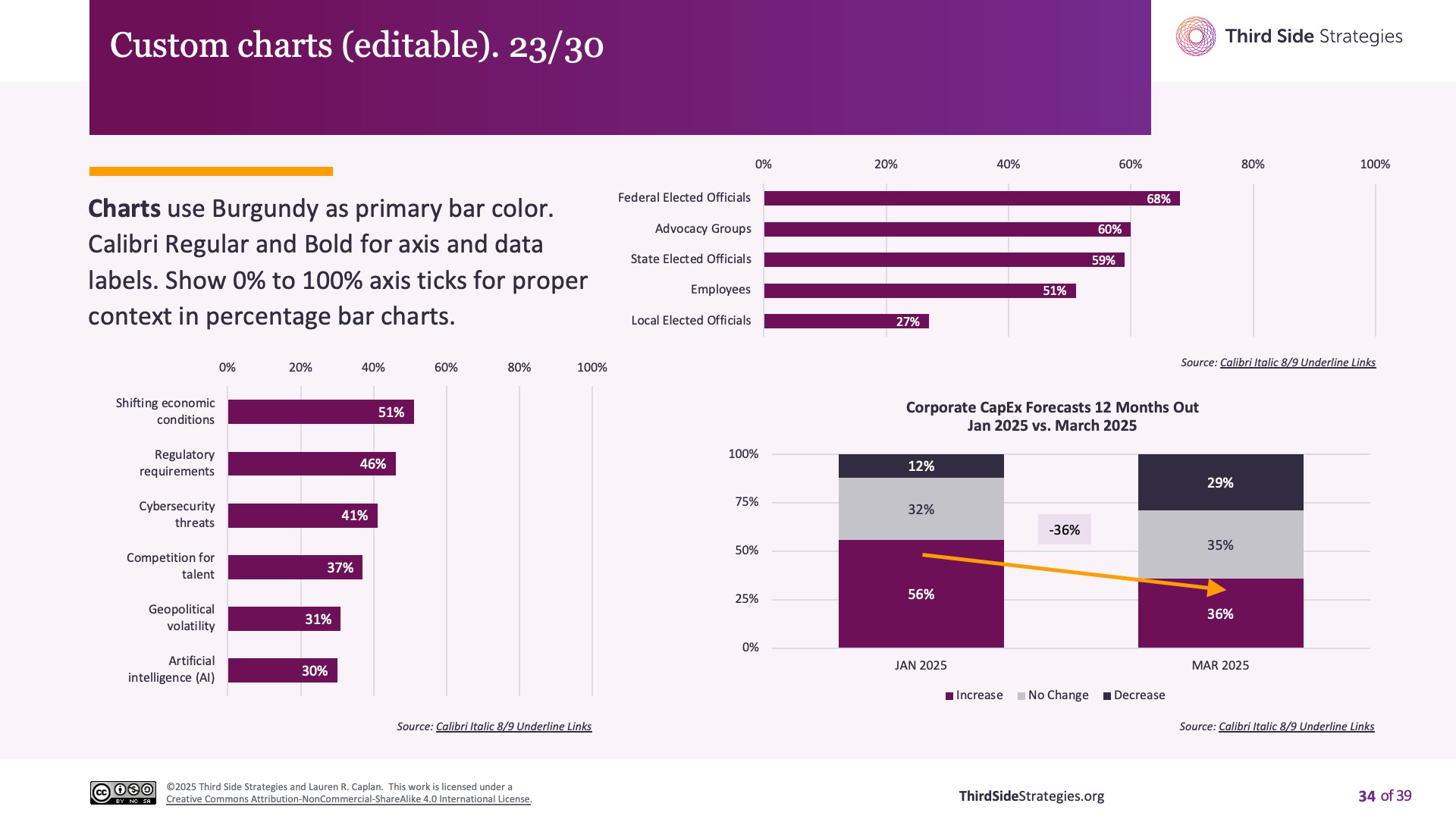
As a consultancy, Third Side Strategies needs a flexible screen presentation template to support workshops, webinars, and training sessions. Covive built a full-custom presentation template using starter content from a typical workshop, and provided a kit of parts of content elements for adaptation by the client team. Typical slides include workshop agendas, section title slides on one or more lines, charts, standard text slides, as well as conversation prompts and definitions.